Words/No Words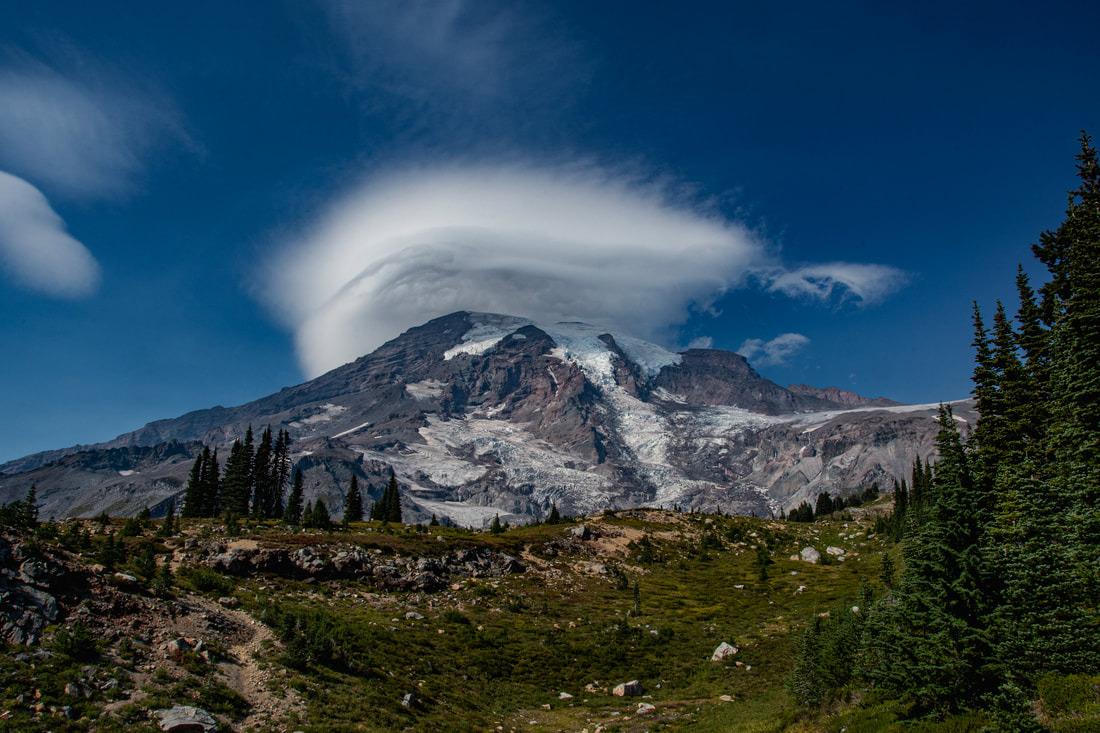
Lenticular Cloud over Mount Rainier, Mount Rainier National Park, from Paradise
|
 Wilson's Cove, Nova Scotia ,Good afternoon from Gloucester, Massachusetts where we'll be in residence until November 2nd. In June, Melanie interviewed and ultimately received a job offer from Salem Maritime National Historic Site while we were touring Canada. She's their latest full time seasonal interpretive ranger and starts with them tomorrow, Sunday, July 14th. We spent a month in Canada touring around in Quebec, New Brunswick and Nova Scotia mostly escaping summer's heat with very few days of rain getting in the way of exploring our surroundings. We began in Quebec City, Quebec spending four days on foot and on our bikes mostly exploring Old Quebec, but also cycling out on the Corridor du Littoral to Parc Montmorency to see the falls there. Neither of us speaks French, but since I studied French in college many years ago, I was (minimally) able to ask in French if the person I was addressing spoke English (Parlez-vous anglais?) or to explain I did not speak French (Je ne parle pas francais). In large measure, that worked for us. Most people we encountered spoke English and those who didn't graciously attempted to communicate with us to accomplish whatever was the task at hand. Time in Quebec City was a great start to our time in Canada and we left wishing for more time there and that Melanie's bicycle had been properly repaired in Burlington. Getting around on bike is a great way to see the sights. 7/16/24 Good morning from Gloucester and our Cape Ann Campsite where the weather service has issued a heat advisory that will last until tomorrow evening. It's currently 83 and sunny with 62% humidity, not the southern heat we know and love to avoid, but it's warm. Back to Canada. Leaving Quebec City, we traveled to and stayed a night in Biencourt, Quebec at a Harvest Host location with a great view of a mountain and the valley below. It began raining shortly after our arrival and rained off and on during our night's stay there. Lovely spot. Moving along the next day found us camped in Amqui, Quebec at Camping d'Amqui. What I remember is the road between Biencourt and Amqui is in bad need of paving. Broken in places, pot holes and low spots made for slower driving conditions. Reminded us of some roads we encountered in Maine earlier in May this year. The town of Amqui itself is pleasant enough and we found groceries and a few good meals there. The campground was nearly empty as their season doesn't really kick off until the end of June when schools are out. It was rainy so we didn't explore much. Our beers and dinner at Microbrasserie La Captive were memorable and worth a try, if you're through Amqui. Thanks again to Michelle for making us feel welcome. The next day found us traveling just over the line from Quebec into New Brunswick to Sugarloaf Provincial Park in Campbellton. Our drive along the Matapedia River was truly spectacular and I'm happy to report that, once on Route 132 E, the road greatly improved. Sugarloaf was our first Canadian Provincial Park. There's a smallish ski area, hiking trails and several reservoirs within the park. The Campground was nearly empty and very well kept. Recommended. We took a few walks in Sugarloaf, along service roads but again with rain off and on. We ate dinner one evening at the restaurant located at the base of the ski hill within the park. Apparently it's one of the few places in town locals gather. "Something to eat," as Melanie sometimes says-, not bad, not good, just something to eat. After a few days in Campbellton, we made our way into Nova Scotia to Northport and Amherst Shore Provincial Park. There are hiking trails and beach access and the campground was well kept. The beach has red sand the color of the clay found in some places in Alabama, but it's sand. Amherst was the first place we encountered mosquitos. We could be outside during the day, but when evening came along, we had to make our way inside unless we sprayed copious amounts of bug spray, something that I'm not too fond of these days. We enjoyed ourselves there. I can recommend it as a waypoint, but there's nothing too close by and as an aside, if you are looking for fuel, avoid Coast II Coast Market just outside the park. We filled our tank with diesel there and experienced problems with our ERG valve that, thankfully, corrected itself after adding new fuel to the tank in Antigonish, NS. The fueling/ERG problem could have been purely coincidental, but jus' sayin'. A big thanks to Sullivan's Auto Service in Antignoish, Nova Scotia for running a quick diagnostic on the Mercedes to determine our problem. When the gentleman assisting told me it would be at least a week before he could make any repair, I asked how much I owed him for the diagnostic. "Nothing, you're traveling, it's the least I can do." The kindness of strangers. Once we were back in Milton, Vermont, a B Service was due for the Mercedes and we found out Mercedes covered ERG valve replacement under warranty since problems are apparently a thing. From Northport we made the drive to Antigonish, Nova Scotia and spent a night at another Harvest Hosts location, Half-Cocked Brewing Company, located just outside of town. Half-Cocked is a former chicken farm converted into a brewery. There's also a food truck located on premises. Both the beer and food are good and worth your while. Antigonish is a college town where St. Francis Xavier is located. After our ERG valve self-corrected and I could breath, we found The Brownstone in downtown for a nice lunch. Melanie found a place for a quick haircut and then we made our way to Half-Cocked for the evening. Leaving Antigonish we traveled to Cheticamp, Nova Scotia on Cape Breton Island where we spent a few days camped in the National Park in Cheticamp Campground. Cheticamp is located along the Cabot Trail. Some thirty plus years ago I drove from Birmingham, Alabama to tour Nova Scotia. My friend and I took the ferry over from Bar Harbor, Maine to Yarmouth, Nova Scotia and traveled along the coast of Nova Scotia in a clockwise route. I had a vague recollection of Cheticamp as a sleepy fishing village near the border with Cape Breton Highlands National Park. I was using a fair amount of black and white film at the time and somewhere in the archives in Birmingham, Alabama there are photos I eventually printed in a darkroom, one that I remember is of a fly fisherman wading in the Cheticamp River on the border of the National Park. My friend and I did a few days of backpacking in the National Park where one morning I woke up, unzipped my tent and saw my first moose in the wild grazing in a pond not 10 yards away. Head beneath the water it emerged chewing, looked at me sitting in the tent, re-submerged unfazed and continued its breakfast. Great memory. The town has changed, but not too drastically. There are certainly more houses, many appear to be seasonals, more restaurants and businesses and a good sized grocery store. There's more of fishing presence with a nice pier or two. Rain was still with us off and on, but Melanie managed a few great hikes, I accompanied her on a nice walk up the Cheticamp on the Salmon Pools Trail and I cycled through town intending to make my way out to Cheticamp Island to the lighthouse located at the northern end. After cycling against a very strong wind for miles, I reached the island only to discover the paved road ended and the crushed gravel road I found was a bit too rough. Absent the wind, I might have continued on. Leaving Cheticamp Campground we drove through Cape Breton Highlands National Park on the Cabot Trail to Dingwall, Nova Scotia. "We camped in Dingwall at Hideaway Campground and Oyster Market for three days. Our campsite had a spectacular view of Aspy Bay and farther up the coast. The campground itself is well kept and as the name implies has, among other seafood, oysters. The owners will shuck them for you or you can take them away and shuck them yourself. It's a no nonsense set up with tables outside just off the office. In addition to oysters they have beer and wine and soft drinks. Melanie and I had a couple of dozen one evening for dinner. Bring your own saltines. We cycled around the area and traveled back into Cape Breton Highlands National Park to hike the Skyline Trail while we were there. Lunch at Morrison's Restaurant is recommended as is dinner at The Markland Coastal Beach Cottages (Restaurant). We met The Markland's chef at the Dingwall post office one morning. He had his twins with him and asked if we were new to the area or passing through. "Passing through," we told him and he invited us to come eat at his restaurant. We cycled to The Markland from the post office and made a reservation for the following evening. Both these restaurant recommendations have really good seafood chowder. Each is a bit different, but each contained identifiable seafood in them. Pieces of lobster, crab, mussels, and fish in each unlike chowders I've eaten in the states where carrots and potatoes are identifiable, but the seafood, such as it is, may be pureed to the point it's difficult to tell just what you've gotten. When in Nova Scotia certainly order a lobster roll every now and again, but try the chowders. They are a thing and they are deliciously prepared. 7/17/24 Good morning from Salem, Massachusetts. I'm in Miranda in the parking lot of the MBTA (Metropolitan Boston Transit Authority) near where Melanie is working for the National Park Service. It's her second day. Still no word from the local Gloucester bike shop on Melanie's bike repair, but hopefully, resolution is close and she will then be able to ride to the West Gloucester MBTA stop and ride the light rail into Salem for work. We're experiencing a bit of warmer-than-usual weather here in Salem, hopefully today marks the last day of elevated temperatures for a while. I say warm, highs in the mid 80's to low 90's today. Temps we don't like while living in the van, but here we are. Back to Canada Leaving Dingwall, we traveled down the coast to just outside of Sydney, Nova Scotia to Albert Bridge, stopping along the way in Sydney. We camped in Mira River Provincial Park another great Canadian park and campground. We were experiencing some of the warmest weather on our trip and so we didn't do too much sight-seeing while in the area, but did walk around town a bit and found a lunch spot near the waterfront. Our next stop was Sherbrooke, Nova Scotia, a village on the St. Mary's River. We had a site on the river camped at Rivers Edge Campground for a night. Sherbrooke is the home of Sherbrooke Village and North America's first Beluga Whale Sanctuary. Beanie's Bistro has a nice Lobster BLT. We walked through the Sherbrooke Village History Museum after hours, but were fortunate enough to chat with one of the people who worked there about the village. They've done a fine job of recreating life in the 1860's with restored buildings of the time period. Traveling along the coast we continued south from Sherbrooke to Dartmouth, Nova Scotia located just across the harbor from Halifax. We camped at Shubie Campground in Dartmouth located within Shubie Park. Between intermittent rain showers we explored the Dartmouth/Halifax area for four days walking and riding our bikes. Shubie Campground has trails that connect with Dartmouth and, while we didn't take the ferry over to Halifax, we could have ridden into Dartmouth on our bikes and connected with Halifax using it. We easily drove the van into Halifax on two of the four days we were there. Parking on the street is possible either downtown or in Northern Halifax. Don't miss a walk through the Public Gardens in Halifax. Leaving Dartmouth, we traveled back into New Brunswick to Hopewell Cape and the Bay of Fundy hoping to witness the highest tides in the world. We camped at Ponderosa Pines Campground and spent three days walking and cycling around Hopewell Rocks Provincial Park. We also drove south to the fishing village of Alma (Fundy-Albert), New Burnswick located at the entrance to Fundy National Park of Canada on a rainy day. We celebrated our 2,000th day of full time travel here. 7/18/24 Good morning from Salem Common, a nice park near where Melanie works. It was too hot in the MBTA parking lot yesterday afternoon so I scoped out the Salem Commons and found very large oaks surrounding the perimeter which, hopefully, will provide needed shade this afternoon. It's cloudy this morning. So far, I'm good. Back to Canada Leaving Hopewell Cape, we traveled west to Hawkshaw, New Brunswick and camped for a night at Sunset View Campground. I should mention here that while planning our stay at Sunset View Campground, I booked the wrong date for our stay. I discovered my error when one of the owners contacted me to ask if I was coming in that night. "No, I'm sorry for my mistake, but is it possible for me to change my reservation," I asked. It was possible, but they only had a tent site with water and 15 amp electricity since they were now booked for the holiday weekend (Canada Day). Upon our arrival, we found out we had a very nice site overlooking the river with water and 30 amp electricity. The site wasn't level, but the owner gave us an assist with leveling blocks. We spent a very nice evening at Sunset and are grateful for them making my booking error go away. If that, in and of itself doesn't tell you about the campground, let me add it's a very well-run and well-kept campground with a heated pool on the St. Johns River. Digressing a bit, Melanie and I spent a few hours in the provincial capitol of New Brunswick, Fredericton, also located on the St. Johns River on our way to Hawkshaw. We enjoyed a nice lunch at Issac's Way (another great seafood chowder was had), purchased coffee beans and walked around town for several hours taking in preparations for their Canada Day celebrations. Beautiful college town worth a detour on your way. Leaving Hawkshaw, we traveled to Riviere-Du-Loup, Quebec on the St. Lawrence River stopping in Grand Falls, New Brunswick to take in the falls and eat lunch. We arrived in Riviere-Du-Loup during a thunderstorm which quickly passed and we were able to take nice walks in the afternoon along the St. Lawrence River. We camped in Camping Municipal De La Pointe. The park has recent renovations to their bathhouses which are very nice. We were there during the holiday weekend so the park was pretty much at capacity, but we enjoyed a quiet night in what appears to be a well run city park. Leaving Riviere-Du-Loup we traveled southwest to Montreal for our last two days in Canada. The trip was 270 miles and so we laid low upon arrival and toured Montreal's Old Port, Parc du Quai-de-La-Tortue and a bit of Nuns' Island the next day. We parked across the river near Parc de la Terre and took the subway into town. We wished for more time and definitely will return, but next time with our bikes since Montreal is a very bike friendly city.
2 Comments
 Sunset, Green Mountains Good afternoon from Westford, Vermont. We've been back here at our friend, Diana's home, for about a week now. Tomorrow we head north for our first venture into Canada. Our plan is to spend a few days in Quebec City, Quebec, then venture north to New Brunswick and then over to Nova Scotia. We don't know exactly how much time we'll have in Canada as Melanie still has National Park Service applications pending for full time seasonal ranger positions that start in July. As of now, we're booked until the middle of June. We spent most of April and a good portion of May in Westford leaving Diana's on the 12th of May and spending a few days in Graniteville, Vermont before heading north to one of our favorite Vermont towns, Newport, located near the Canadian border on Lake Memphremagog. We rode the Beebe Spur Trail up to the Canadian border several times and even ventured over into Canada to ride the extension of the Beebe one day. We weren't able to ride too far along the Sentier Nature Tomifobia trail as a bridge was out about 5 miles into our ride. Riding back, Melanie got a stick caught in her bicycle derailleur and, after I attempted to fix it and subsequently destroy it, we found ourselves walking back towards Stanstead. Shortly after beginning our walk, it began to rain. Luckily we had our raincoats, but after about 15 minutes we were both soaked from our thighs down. Squishy shoes. The rain didn't last and before too long we'd pretty much walked ourselves dry and back into Stanstead where we had a nice lunch at Maison Gorchon. Afterwards, we walked the remaining short distance to the U.S. border and I left Melanie at the Beebe post office while I cycled back to Newport and traveled back in Miranda to get her and the bike. On our way back to our campground we stopped in for a beer at a local watering hole, T Bar, in Newport and had a snack too before heading back to our camp at Prouty Beach Campground. We camped one night on our way towards the Maine coast in Litchfield, Maine at Birches Lakeside Campground. We had a nice campsite with a lake view and enjoyed being on beautiful Lake Cobbosseecontee. Leaving Litchfield, Maine we traveled to the coast and Bar Harbor where I had previously contacted Bar Harbor Bicycle Shop about repairing Melanie's derailleur. We are grateful for their willingness to take us in on short notice and replace her derailleur while we found lunch nearby. It made our time in Acadia National Park much more fun. A few years ago we met Roger Clyne in Georgia when we camped with him and his wife Bonnie at their home through Boondockers Welcome. Roger and I have stayed in contact so when he and Bonnie moved to Maine some time ago, he invited us to visit them if ever we were nearby. He now has a spectacular spot on which he intends to construct a home at some point. It's located north of Birch Harbor, Maine on a peninsula facing west. Melanie and I spent four days there and were able to explore the area on our bikes. The sunsets were great. We cycled around Schoodic Peninsula of Acadia National Park one morning. Since it was early season, there were few cars or bikes around. We rode the coast and circled back to the Visitor Center where we'd parked Miranda on a part of the 8.3 miles of bike trails in the park. One one of the days we were camped with Roger, we ventured north to Machias, Maine. We'd hoped to ride a portion of the Down East Sunrise Trail, but once we were on it riding we quickly realized the portion of the trail we were riding was only suitable for ATV's. Large pieces of loose gravel were present making for a rough ride. We opted for checking out the town and Fort O'Brien State Historic Park nearby on bikes. We had dinner at Helen's Restaurant where we both had Lobster Rolls and tried the seasonal Maine delicacy, Fiddleheads. Both were a treat. Our last day in Maine we spent in Acadia National Park, cycled Carriage Trails and spent the night at Blackwoods Campground. We had a nice lunch in Northeast Harbor at Colonel's Restaurant and Bakery. Melanie began to experience a problem with her bike while on the carriage trails and we were lucky to be able to ride back to the campground. We both agree Acadia is one of our favorite National Parks. We made our way over to New Hampshire for a night to Chocorus KOA Holiday campground and then traveled back here to Westford where we've been since. Finally, a shout out to our mechanic at Earl's Cyclery and Fitness in South Burlington for agreeing to take Melanie's bike in and give us a quick turnaround repair time. Luckily, it was a relatively minor fix. We are grateful for his assistance especially since we had already booked our Canada adventure a few weeks in advance. Watch this space. We're pretty stoked about Canada.
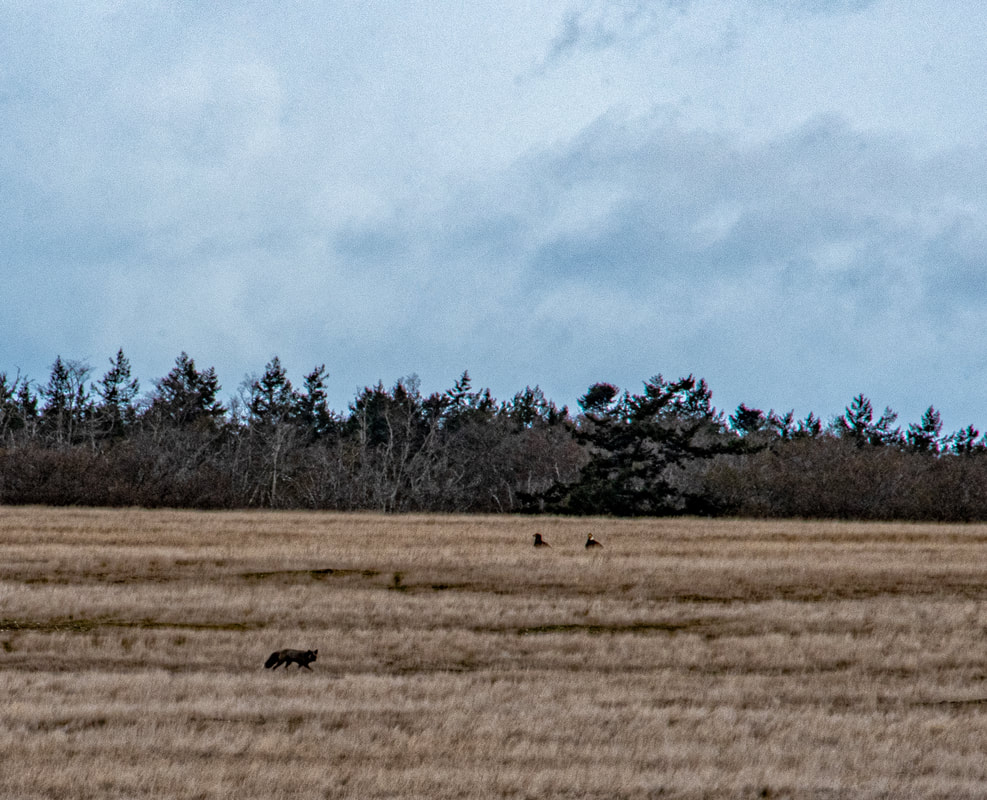
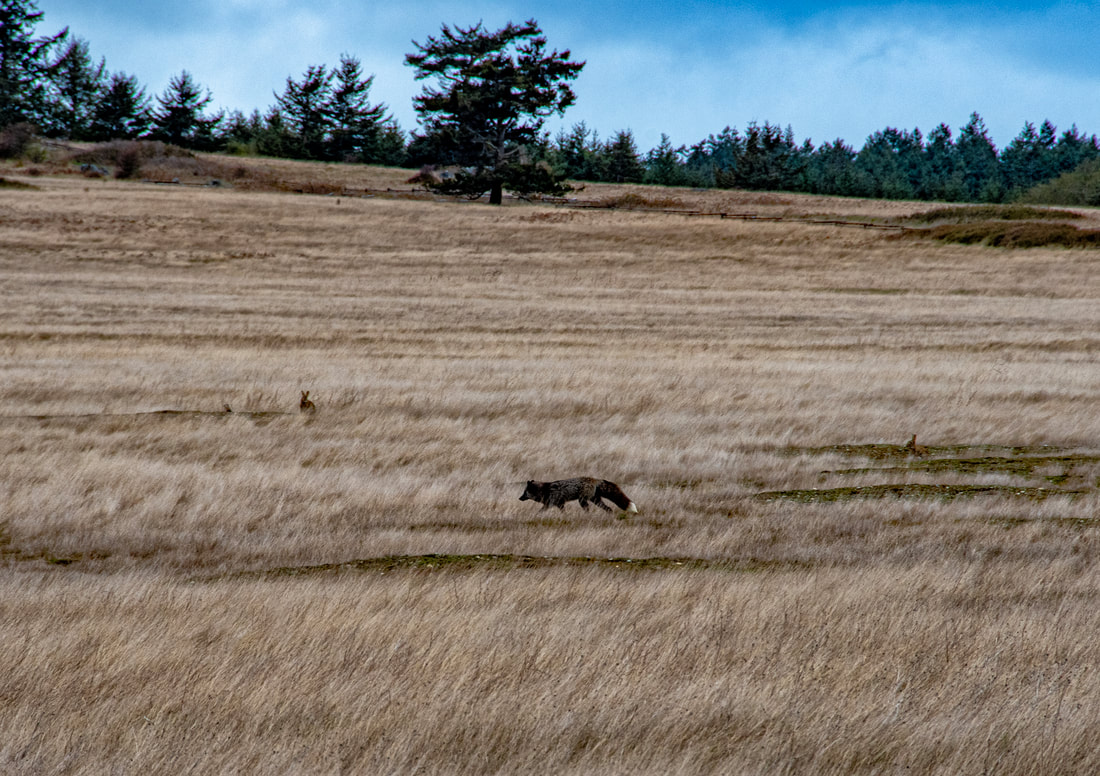
 Sunset Mount Mansfield April 6, 2024 4/24/24 Good afternoon from Westford, Vermont. We've been visiting our friend, Diana, since the 5th of April and, while we enjoyed an amazing Spring day yesterday, today we're back to a mix of snow and rain. Tonight's low is predicted to be 25 degrees Fahrenheit. While many of the maples have their familiar red flowers of Spring, stick season and mud season are with us. My last Travel Journal post was on January 10, 2024 when I posted our Annual Report from Collinsville, Mississippi. We were on our way to meet friends, Robyn and Hank, from Florence, Alabama for a camping weekend at an Army Corp of Engineers campground. Our friends bailed on camping due to inclement weather (storms and cold) and we ended up spending a nice few days with them at an Airbnb in Water Valley, Mississippi near Oxford, Mississippi. 4/26/24 I had technical trouble stopping my progress on the 24th, life happened yesterday. Anyway, continuing with my summary of the past few months (how Melanie and I spent our Winter 2024), because of weather (low temperatures) we had to travel south quickly from Water Valley. We spent a couple of nights camped at Paul B. Johnson State Park outside Hattiesburg, Mississippi. Lots of improvements currently happening to their campgrounds but, once competed, what's already a great setting will be worth a stop as a camping destination. We made it to the Gulf Coast and spent three days at Fort Pickens Campground (a favorite) located within Gulf Islands National Seashore. It's truly a wonderful resource near Pensacola, Florida. It was a bit cold for our bikes this time through, but we took walks and one day took the van and traveled as far east as Navarre Beach and back. After Fort Pickens we needed to travel back to Birmingham to get our bikes repaired, but temperatures remained too cold, so we headed east along the coast to Topsail Hill Preserve State Park (another favorite) and spent three nights there. After Topsail, we traveled to Birmingham, Nashville and over to Sevierville, Tennessee staying a few nights at Two Rivers Landing RV Resort. This was a way point on our way towards the east coast, but we enjoyed a nice quiet few days. We stopped at Great Smoky Mountains National Park on our way towards Greenville, South Carolina. Outside Greenville we camped at Paris Mountain State Park and spent another quiet few days walking the trails there. From there we next spent a few days just southeast of Charleston, South Carolina in James Island County Park. James Island is the nicest of the County Parks in which we've camped thus far. Volunteers do a nice job of maintaining the campground facilities. Great hiking and multi-use trails which we biked and walked for four days. Many of the activities happen during the summer months. Lots of activities then for families with children. Continuing south along the coast we next camped on Hunting Island, South Carolina. We spent 3 days there at Hunting Island State Park. The weather cooperated a bit and we were able to get our bikes out and explore. We spent a rainy Sunday midday in Beaufort, South Carolina walking around and having lunch. Skidaway Island State Park was our next destination. We camped there for two nights and enjoyed a bit of what Savannah has to offer. We always like spending a few days in Savannah and the State Park is definitely a favorite. We also took in Wormsloe State Historic Site not too far from the park. Farther south we spent two nights on Jekyll Island at the Jekyll Island Campground. We enjoyed both walking and riding our bikes around the island which has extensive multi-use trails. After Jekyll Island we headed into Florida and Clay Fair RV Park in Green Cove Springs the city where we are domiciled, where our home is registered, where we vote. Melanie had a doctors appointment and we camped there for 3 days checking out the area for the first time since we domiciled there over 5 years ago. We then visited family near Orlando, Florida and traveled farther south to Melbourne Beach, Florida camping in Long Point Park. Long Point is a nice county park located on an island on the Indian River. From there we stayed a night in Vero Beach, Florida at a Cracker Barrel. We'd used a Cracker Barrel parking lot while visiting family near Orlando, our first and, since the experience was a good one, we stayed at the Vero Beach location. Without belaboring the obvious, Winter travel in Florida is competitive with many seasonal campers in evidence. So, when you fly by the seat of yo' pants and don't reserve campsites far in advance..., Cracker Barrel to the rescue. 😎 Belle Glade, Florida and Torry Island Campground, another county park, was our next camping spot. We camped there for 6 days. We walked, biked around the park and on a trail that runs around nearby Lake Okeechobee and spent a nice day in Palm Beach where we biked around the Island, had a great lunch and rode by the scene of the crimes, Mar-a-Lago. We visited family in Palm Harbor and spent a nice weekend there. It was then back to Jacksonville for follow up doctor's appointments for Melanie and another Cracker Barrel. Traveling west from Jacksonville, we spent a night in Sanderson, Florida camping at Ocean Pond Campground located in Osceola National Forest. A hidden gem. Farther west we camped 1 night near Tallahassee, Florida in Midway, Florida at High Bluff Campground. Another campground as way point. The campground offers lake views, secluded, dry camping on Lake Talquin. In Port Saint Joe we camped 5 days at Water's Edge RV Park, a smallish park located outside of town and adjacent to the Indian Pass Raw Bar. We ate at the Raw Bar a few nights and explored the area walking, by bike, took Miranda over to explore Saint George Island on a rainy day, and, while there, checked out Dr. Julian G. Bruce State Park, for future reference, a definite great spot to camp for days. We made a just after New Year's 2025 reservation to camp for a week at Saint Joe Peninsula State Park. The campground was reworked after a hurricane and has all new campsites and a new bathhouse. Great spot. We began a northern trajectory after Port Saint Joe, first camping in one of our favorite Corp of Engineers campgrounds, Gunter Hill, just outside Montgomery, Alabama for 2 days, then on to our friends, the Andersons for 3 days. We were able to have dinner with a friend, Michael, in Montgomery while we were there. It's always great to see the Andersons and driveway surf with them in Birmingham and, as bonus for us, we were able to spend much more time with them this winter season since we didn't travel out west as in past years. We also were able to see our long-time friends, Keith and Beth, again for brunch while in Birmingham. More time with them always a plus. For those following along, we're now into March and we're beginning to look forward to being in Vermont for the solar eclipse, but first we had to travel to Saint Louis, Missouri for installation of a new storage compartment in the place where our generator used to be. May that smelly, noisy thing rest in peace. Continuing north, we spent 2 days with Zoe and Tate in Nashville, a night in Metropolis, Illinois at Fort Mossac State Park, and then into Saint Louis camping in Cahokia, Illinois just across the river in Cahokia RV Parque. Lunch one day at Grace Meat + Three, a nice meal at Sidney Street Cafe and visited our favorite bar, Venice Cafe, while in Saint Louis. From Saint Louis we traveled east again towards Louisville, Kentucky and a visit with our friends, Pif and Chip, who live there. We also got to catch up with Pif and Chip's daughter and son-in-law, Jessica and Ziggy too. We stayed a night in Gentryville, Indiana camping in Lincoln State Park as a way stop before Louisville. Lincoln State Park is a nice park and campground with trails for hiking and there's boating on Lake Lincoln built by the CCC in around 1932. We camped in a Cracker Barrel parking lot in Louisville. This one's a bit noisy, by the by. Leaving Louisville, we headed northeast to Cincinnati, Ohio where we camped 2 cold nights on the Ohio River at Tuckers Landing RV Park. We took a chilly afternoon walk in light snowfall along the Ohio River on the Ohio River Trail when we first arrived and visited the Cincinnati Zoo and Botanical Garden the next day. Alum Creek State Park was our next camping spot on a lake created by the Army Corp of Engineers for flood control and recreation and near Delaware, Ohio. We spent 2 nights there and visited the campus of Ohio State as we passed through Columbus, Ohio. Melanie lived in Delaware and worked for her sorority that had a chapter on the campus of Ohio Wesleyan. We spent a night in Salt Fork State Park in Lore City, Ohio. Salt Fork is a beautiful state park located on Salt Lake. We lucked out on a camping spot there. I had scheduled us to camp at a Cracker Barrel in Cambridge, Ohio, but in checking out Salt Fork State Park nearby we discovered they had opened up more campsites that day. We were one of two campsites occupied in a newly opened loop. Sublime. We also took a walk on the Great Guernsey Trail just outside Cambridge during the day. We have a good friend, Rebecca, who lives in Morgantown, West Virginia. Rebecca lost her husband, also our friend, IB last year. We met them in Brevard, North Carolina at a National Forest Campground years back and became friends. It was great to catch up with Rebecca as we continued to grieve the loss of IB, an engineer who loved adventures of all kinds. Centre Hall, Pennsylvania was our next stop. We camped at Stem to Stable Farm, a Harvest Host location. We purchased their lamb chops and ground beef for later consumption. Great evening with these nice folks. Sayre, Pennsylvania was our next stop and Halcyon Hill, a Boondockers Welcome location. We spent the early afternoon walking around Stephen Foster Lake in Mount Pisgah State Park nearby. We were able to spend nice time with Kay, our hostess, who told us about the area where she grew up. She gave us information on local attractions for next time through. We made a short trip to Richford, New York for a visit with our friends, Linda and Michael. Linda was on the board of the Episcopal Peace Fellowship while Melanie was executive director. Great catching up with them. We traveled into Ithaca took a nice walk along Lake Cayuga on the Cayuga Waterfront Trail, had lunch at Moosewood and bought coffee beans at Gimme Coffee, a favorite place for beans. Leaving Richford, we traveled to Lake George, New York where days earlier they'd had 18 inches of snow. When we arrived at Whippoorwill Motel & Campsites, we were one of only a very few Rv's, and the landscape was still covered in 4-5 inches of snow. Luckily temperatures were moderating and we spent a nice couple of days there. We took walks on the Warren County Bikeway into town. Lake George is pretty much a seasonal destination and we were early. Many businesses close for winter and don't come back until sometime in Spring, many were yet closed in late March. We made it into Vermont and camped in a Boondockers Welcome driveway in Bennington for the last two days of March. We walked on the Bennington Rail Trail and Melanie attended Easter Services at the Episcopal Church. Bennington is a nice town and a nice reintroduction to Vermont. April Fool's Day was spent in Brattleboro, Vermont at a Harvest Hosts location, Saxons Distillery. The distillery was closed, but they allowed us to spend the night there. I should add we've enjoyed Saxons libations on previous trips. Recommended. 4/28/24 After lunch along the Connecticut River at Whetstone Beer Company, we drove to Keene, New Hampshire where Melanie walked around town and I took my bike out and rode a portion of the Ashuelot Recreational Rail Trail. There's a favorite shop in Keene where we've bought truffles and Melanie, loving me as she does, bought me a nice variety. Leaving Brattleboro, we traveled north to West Barnet, Vermont to another Boondockers Welcome location and spent the night next to our hosts' nice garage. The weather at this point was beginning to look really dicey, snow, significant snow, was predicted for the next several days. We made the decisions to contact our friend, Diana, in Westford and ask if we might arrive two days early. She graciously consented and we luckily arrived the next day before the rain, followed by snow began. Over the next 3 days we received about 18 inches of snow. It was a Spring wonderland. We've been in residence here in Westford since. The eclipse on April 8th was nothing short of spectacular and, while we arrived believing we might not experience it because Spring in Vermont is cloudy a lot, we lucked out and got the full show. One of those once in a lifetime events not to be missed. We discussed the next one happening in Europe in a few years. Who knows? We are so very grateful to Diana for allowing us to stay with her here in Westford while we figure out next moves. I've got my own space for writing and processing photos upstairs in our bedroom. I'm looking at cloud draped Green Mountains and Mount Mansfield as I type this morning. Melanie has applications out for Park Ranger jobs at two National Parks in the Northeast and we're waiting to hear about those. She and Diana have traveled into Burlington this morning for church services and a quick trip to a market. Our refrigerator gave up the ghost on our way into Vermont, freezing everything inside the freezer compartment and the refrigerator compartment too. A new and different one has been shipped and should arrive in a matter of days. I found Peter at Vermont Road and Home to perform the installation service for us. We're, off and on, discussing the possibility of a bit of touring in Canada later in Spring/early Summer, but it's likely we'll spend much of Summer in Vermont. Watch this space. 😎 Winter/Early Spring Photos 2024 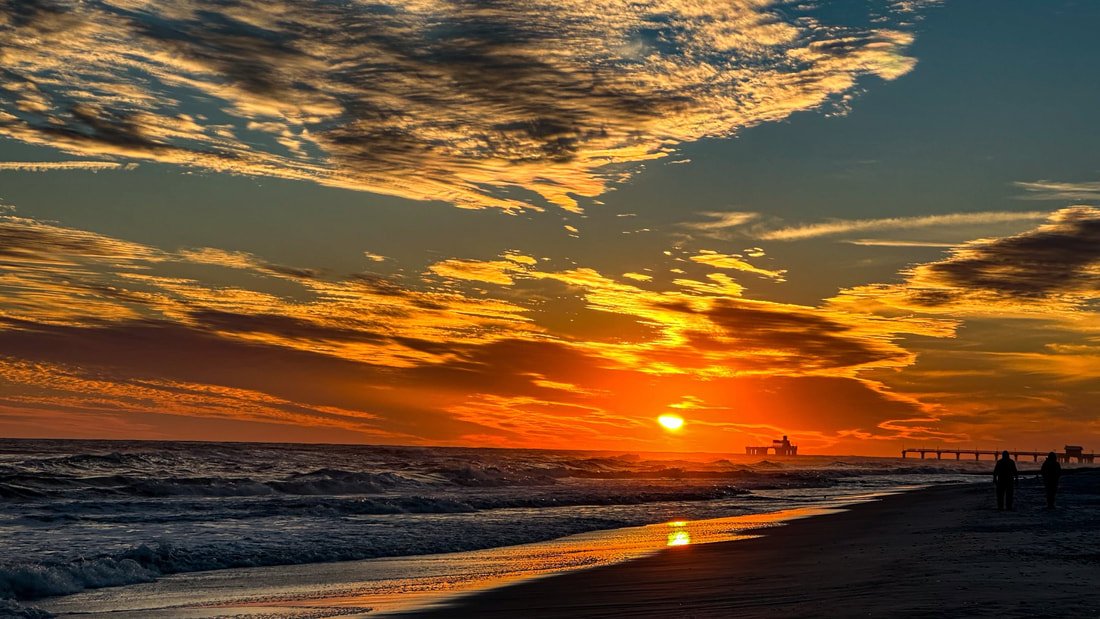 Sunset @ Gulf State Park, Gulf Shores, Alabama Good morning and Happy New Year from Collinsville, Mississippi where we've been for a few days ducking the inclement weather along the gulf coast. We're camped at Twiltley Branch an Army Corp of Engineers campground. I'm cutting and pasting much of the text from last year's annual report to save some time. As many of you who have been following us know, I started keeping tabs of all our expenditures when we started living in Miranda full time. For those of you out there who may aspire to the van life, living in a van down by the river, I hope this glimpse into what our costs in 2023 provide an assist. 2023 was different in that we were volunteers on San Juan Island, Washington at San Juan Island National Historical Park for 4 and 1/2 months from May to September. I again offer this disclaimer. You may experience traveling full time differently. Variables include your means, your interests, whether you're working or retired, how often you like to move, etc. Use this as a very general guide for the related costs. Costs reflect our way of traveling. The world is/remains your oyster. In 2023 we traveled 12,528 miles. That's down from 21,491 miles in 2022 and reflects our time on San Juan Island where we only traveled a little over 300 miles during our time there. We continue to chase those ideal temps and climate from state to state, sometimes succeeding, sometimes, not so much. Winter 2023 was the coldest (overall) and wettest we've experienced. Past winters in the southwestern US where we usually winter have been nothing short of wonderful, but this past year was dramatically different. We did our best to find warmer temps that, for the most part, simply didn't materialize. We camped in 85 unique spots in 19 different states in 2023. We spent 31.3 % of our flexible costs budget dining out and 20.8% on groceries (flexible costs represent 20% of our total budget). We spent more in 2023 on dining out and a bit more on groceries too. See also inflation and living on San Juan Island where costs were higher overall. Campground fees last year were $7,964.01 (12.8% of our flexible costs), an average of $663.67 a month. In 2022 we spent $10,380.65, a difference of $221.33 less monthly than in 2022. The National Park Service provided us with a full hook up campsite for 4.5 months at no charge to us as volunteers which, in part explains the difference. Our time is divided between staying at private campgrounds, National Parks, State Parks, County and City Parks. We also have the Harvest Hosts service which provides us a data base of businesses and private individuals who will allow us to stay for free for up to 5 nights. We stay on BLM land too. Every now and again we park and sleep on a city street or a driveway for a few days. That generally happens when we are visiting a friend or family. We also have a few friends with summer homes in great places that offer us refuge when we visit them. I could, of course, get off in the weeds here and tell you precisely how the Campground category is broken down, but usually our choice of campground is determined by a given route we've chosen. We prefer National, State, County, City, and BLM or free spots when we can get them, choosing private campgrounds for amenities like proximity to a city or bike trail, laundry, pool, hot tub, etc. Campendium is my go to application for finding campgrounds. While the service is generally free, we support their efforts and receive a few perks for our donations. Diesel fuel cost us $4,312.37 (6.9% of flexible costs) or an average of $359.36 a month in 2023 a decrease of $180.98 monthly over 2022. No mystery here. Traveling about 300 miles in 4.5 months while on San Juan Island decreased overall consumption. We're glad to see prices continuing to drop, and are anticipating further reductions in 2024 barring unforeseen circumstances. Fuel prices were in the $5 plus range as we departed Washington State in September. We paid $3.32 a gallon for diesel in Robertsville, Florida a few days ago. AAA reports that national wide the average price of diesel today is 3.947 a gallon. A year ago it was 4.638. We use Gas Buddy sometimes to find fuel, but generally just to give us an idea of what prices are like in the area. Prices along major highways are generally anywhere from $.20 to $1.00 more per gallon than prices sometimes only a few miles off the major highway. Also, be aware that using Gas Buddy doesn't always mean the price you see listed is the price you'll pay. Not sure what is going on, but increasingly I've found that the price is inaccurate when I get to pump. Not always, but enough to give me pause. It's a bit frustrating especially when you've traveled a bit out of the way to get the price you believe is a substantial savings. Mercedes scheduled maintenance cost $940.00 in 2023. We had an A service done in the Spring. We spent $3,847.43 (6.2% of flexible costs) on miscellaneous maintenance items such as dumping tanks, tank treatment, DEF, water filters, replacing our diesel generator with a portable Honda generator, replacing our microwave/convection oven, new Mercedes battery, replacing valves on dually tires, new shower caddy, trickle charger, and other miscellaneous items we needed for general operation. Our two electric assist Trek bikes cost us $1,333.76 (2.1% of flexible costs) to ride in 2023. Costs include repairs of flats, miscellaneous items for both bikes and major tune ups for both. The bikes serve us as transportation and recreation since we don't tow a car. 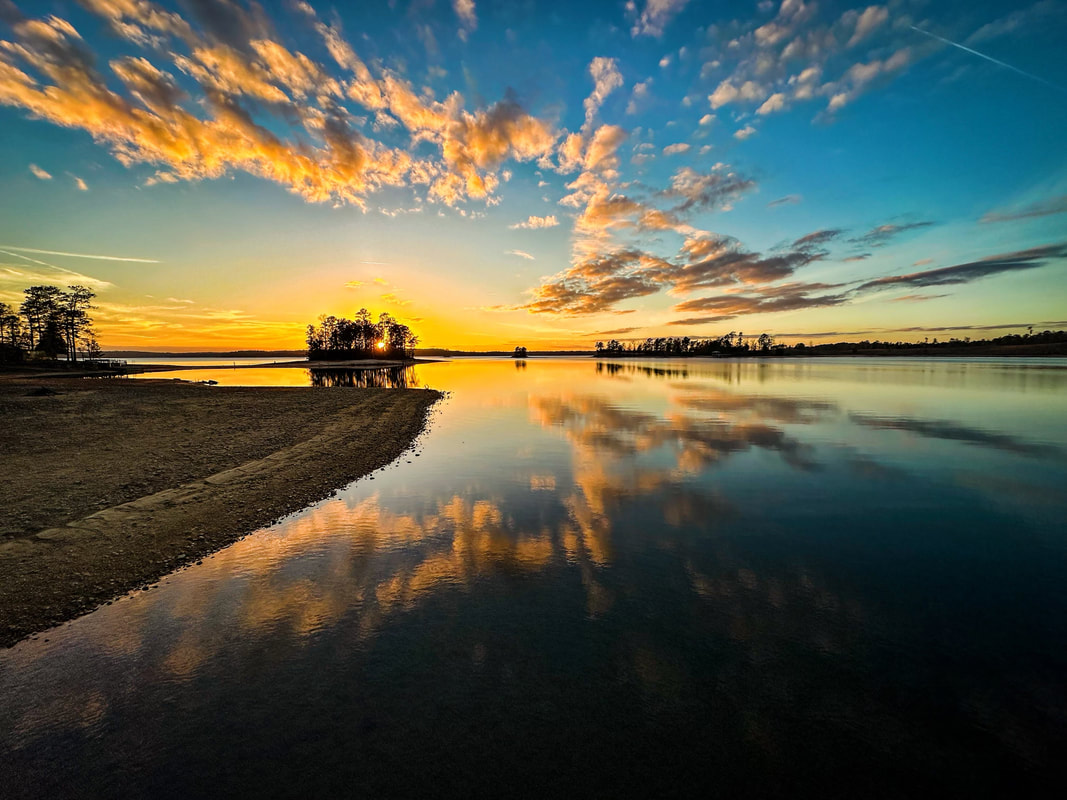 Sunset, Lake Martin, Alabama November and December 2023 were spent traveling to various locations to visit with friends and family. We spent time in Nashville with our children, in the mountains of North Georgia with our long-time friends who are more like family, and Birmingham, Alabama with other of our long-time friends who are family and most gracious hosts, Wade and Jen Anderson. We also spent time at Lake Martin with long-time friends who are family, Keith and Beth Johns. They have a wonderful and cozy cabin there. Thanksgiving was with family in Faunsdale, Alabama, Christmas with our children, Tate and Zoe, was in Nashville and Henderson, Tennessee with Zoe's family, and New Years in the mountains of North Georgia with family and friends. While we would normally be making our way to the southwest this time of year, this year we'll remain east so we can more easily make our way north to Vermont for the April 8th total solar eclipse. While we're a bit cooler than we'd ideally like to be, and tornados and hail in January are not particularly what we want to dodge, we continue to travel to new and interesting places. We plan on visiting the Atlantic coast and making our way into Florida in the coming months before heading north. We anticipate another great year on the road. Watch this space. 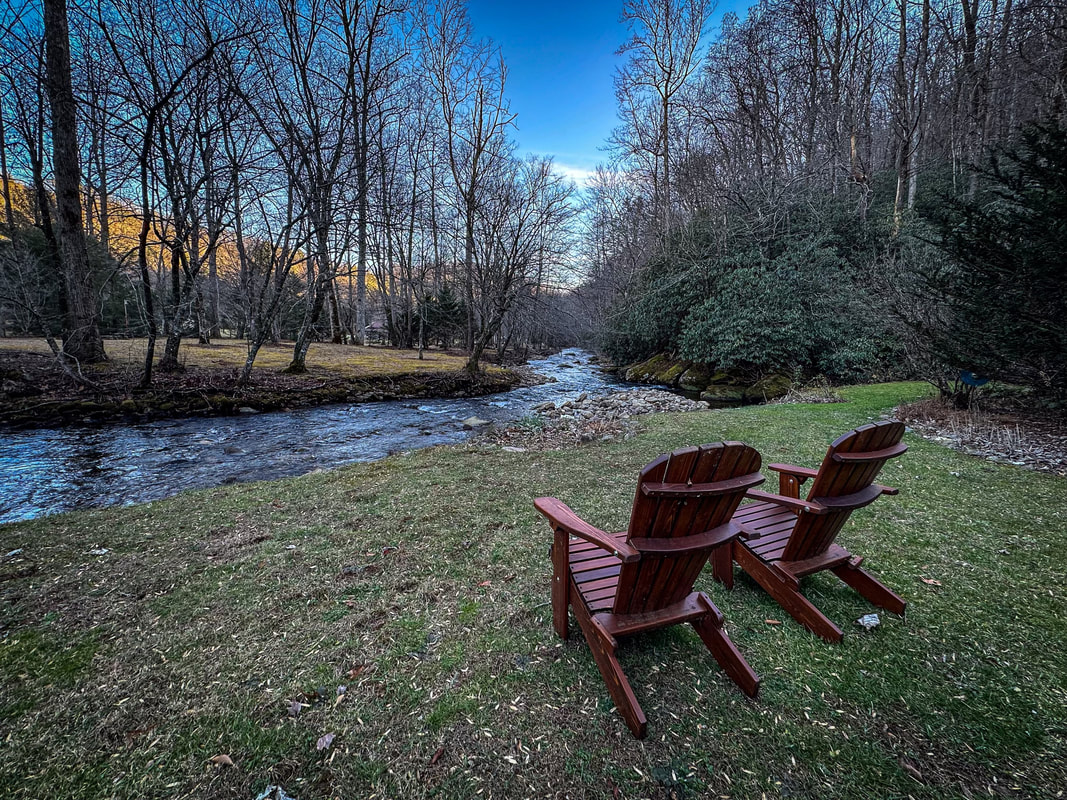 Tallulah River, North Georgia 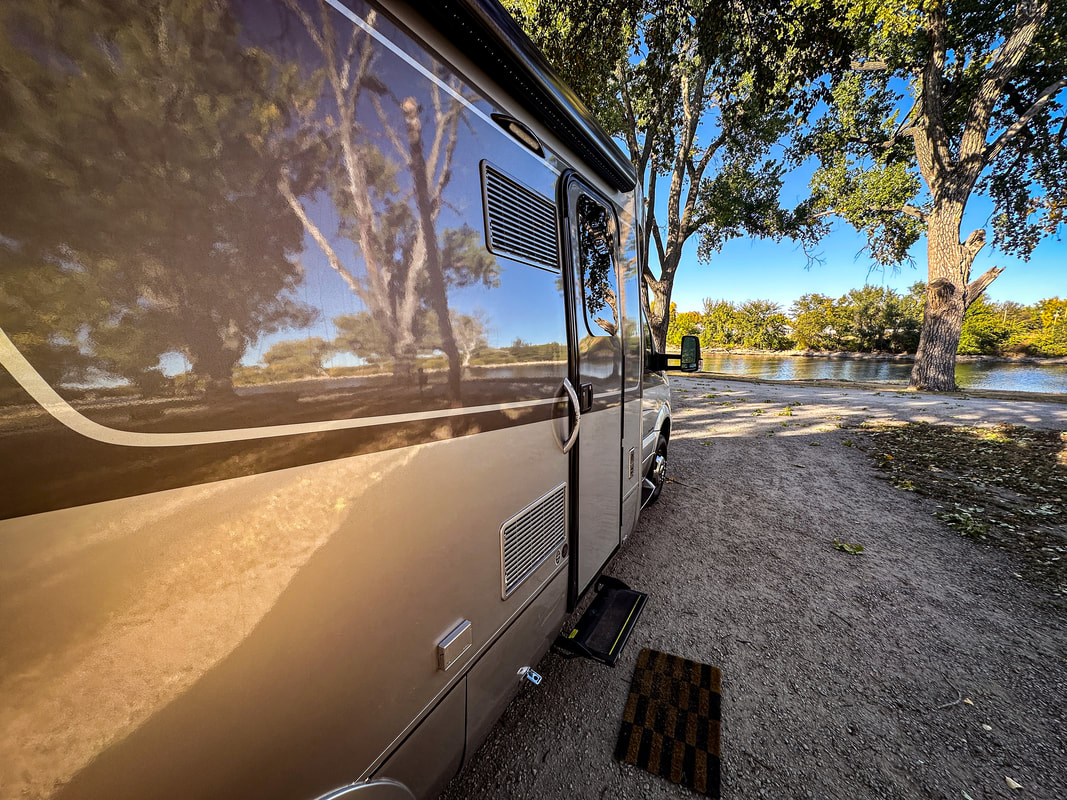 The van. Down by the river. Five years ago today, Melanie and I moved into Miranda and began what's proven to be the adventure of our lifetimes. We're currently camped at Canal Campground in Grand Rivers, Kentucky, a nice campground of the Army Corp of Engineers. The campground is part of Land Between the Lakes National Recreation Area. Since early in October, we've been moving more regularly than is usual for us as we made our way across the country. After leaving Grand Teton National Park where we camped for a week, we camped in Green River, Wyoming (1 night), Vernal, Utah (2 nights), Steamboat Springs, Colorado (1 cold 22 degree night), Fort Collins, Colorado (1 night), Thornton, Colorado (1 night in a Cabela's parking lot), Littleton, Colorado (1 night), Denver, Colorado (2 nights), Burlington, Colorado (1 night), Ellis, Kansas (1 night), Topeka, Kansas (2 nights), Columbia, Missouri (1 night), Wildwood, Missouri (2 nights), Lynnville, Indiana (1 night), and finally here in Grand Rivers, Kentucky (3 nights). Some of our more rapid pace had to do with our desire to position ourselves for Winter and enjoy visits with friends and family who we tend to begin missing as Fall happens each year. Some of it was due to housekeeping issues needing attention. We developed a generator problem in Wyoming (still unresolved), we needed a few coach repairs done and we developed a tire issue in Denver that finally got resolved in St. Louis. These housekeeping matters are no different than those we experienced as homeowners except they happen while on the road in places with which we may, or may not be, familiar. I was fortunate to bump into Don Klassen, the soon-to-be-semi-retired territory Sales Manager for Leisure Travel Vans, while getting work done at Van City in Saint Louis. We first met Don at Van City in June 2017 when we were considering buying our van. He let us test drive the van he was driving at the time and helped us with our order and, ultimately, our delivery. It was great to catch up with him and to meet his replacement, Randy Klassen. Among other things, we discussed the importance of being comfortable with the art of the quick pivot and learning how to negotiate needed repairs when many RV businesses are reluctant to see you since they are scheduling weeks or months out and you don't necessarily have the time to wait. It's just part of the living on the road. A shout out to my rock, Danny Dwyer, when it comes to trouble shooting problems and assisting us with getting service done over the years at Van City in St. Louis. Over the past 5 years Danny, has always been quick to respond when I text with a question or problem. He's become a friend and a great part of our travel equation. Thanks also to Van City's Service Manager, Scott, and his team for their assistance, too. From Grand Rivers, we'll slow the pace a bit, staying 3 nights again in our next location. I searched our website this morning and found what I wrote after our first year anniversary. I read a few more posts from our first year of travel and I have to say, though 5 years have passed, I'm not sure there's much I'd change or add as far as insights go for anyone considering full time travel. We're still learning, but most of the time our life on the road is pretty seamless. We continue to enjoy this life immensely and, barring any unforeseen event(s), our intention is to continue down the road a piece. Watch this space. Missingpersonsrv on Instagram 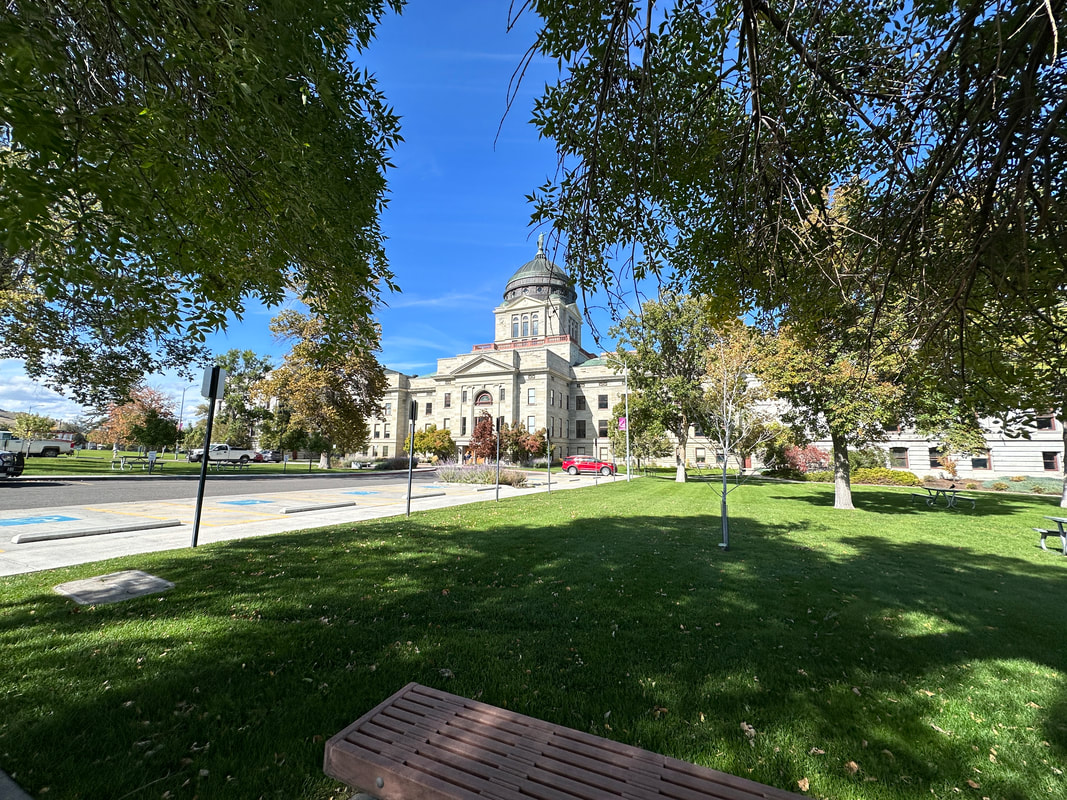 West facing side of the Montana State Capitol building Good afternoon from Helena, Montana. We're currently parked downtown in front of the state capitol building. Melanie has a work-related call in a few minutes and afterwards we hope to walk inside and take a brief tour of the building. We left San Juan Island, Washington on September 12th just under 4 and a 1/2 months after arriving there on May 2nd where we became volunteers at San Juan Island National Historical Park. Since then we've visited our friends, Nancy Crowell and Mike Carlisle, in La Connor, Washington for a few days, spent four days on the south side of Mount Rainier National Park at Cougar Rock Campground, camped in Yakima, Washington at Yakima Sportsman State Park, then on to Walla Walla, Washington, Couer d'Alene, Idaho, and Missoula, Montana. We're back in our groove on the road and enjoying traveling again. We are grateful for this life. It's a trip. Fall weather is upon us with lows in the 40's the past few days and today we began to see the beginning of the changing seasonal leaves with golds and reds showing themselves to us. Tomorrow we're headed south towards Yellowstone and Grand Teton National Parks. We'll be in Gardiner, Montana a few days then on to either Jackson Hole, Wyoming or nearby at Gros Ventre Campground. Beyond that, other than drifting east, dunno. I'd like to digress here to put a soft period to our summer past, one of the best of our traveling lives and certainly one of the best summers of my life while volunteering at SAJH. During the summer I heard about a series of questions one of the park's interns, Saani, was considering composing for the summer volunteers to post (somewhere). I approached her at a pot luck we hosted at our campsite and asked if I could assist her by doing portraits of the volunteers to accompanying the printed answers to her questions. She agreed, but we only ended up with three people responding before her tenure at the park was over. Melanie and I were two of the three and Allison Hurkey, Interpretive Ranger, one of our bosses at American Camp, was the third. I was remiss on this one by not forwarding the questions to others in our stellar volunteer summer group to get their responses. At this juncture the questions and responses are a good way to summarize our experience of being volunteers. Volunteering and living in a National Park is an experience we won't soon forget and one we can highly recommend to anyone who loves our parks. We are grateful for the opportunity. Melanie 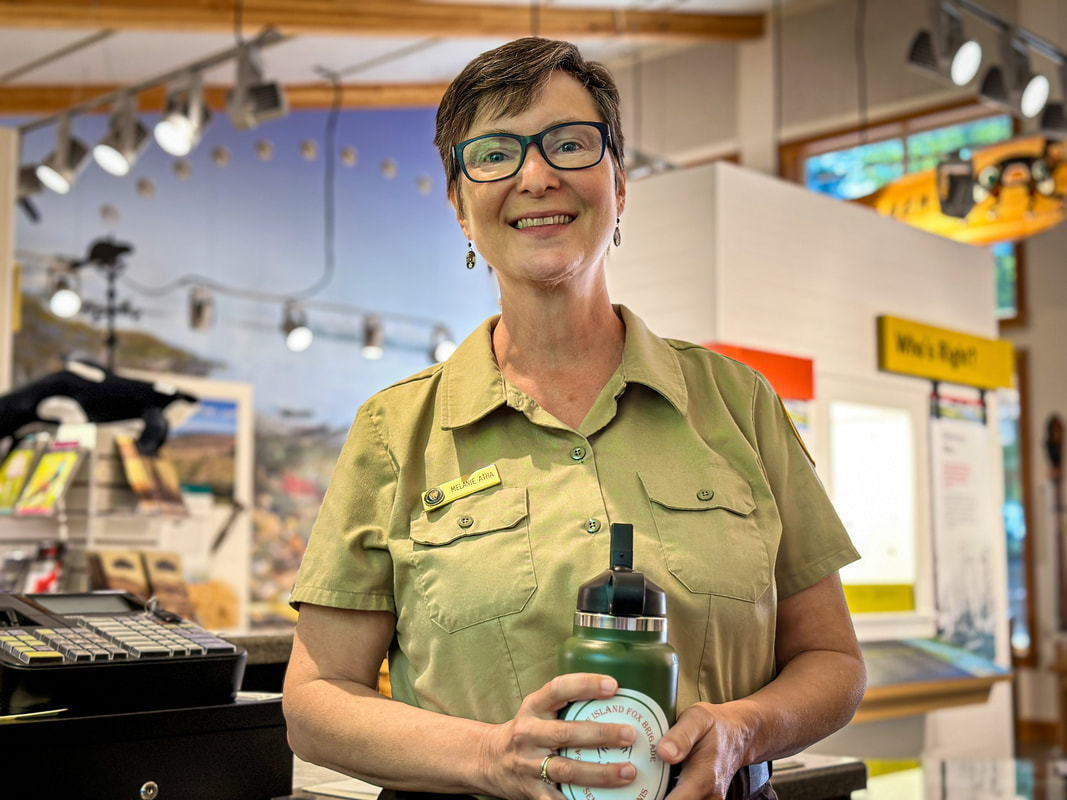 National parks are renowned for their abundant biodiversity and unwavering conservation efforts. What drives your passion to dedicate your time and skills towards safeguarding and preserving these natural resources? In what ways do you envision yourself making a meaningful difference as a volunteer in a national park? The National Parks are a treasure. I’m so grateful for those inspiring souls who went before us who had the grace and vision to advocate for preservation of public lands. My small part in this work is having a genuine passion for nature and history and sharing that passion with others. I hope it is contagious! What aspect of working at SJINHP do you find most enjoyable? Additionally, do you have a preferred spot within the park where you like to unwind and rejuvenate after a long day's work? My favorite work has been offering the wildlife viewing station to visitors. I’m told that our mere presence as uniformed volunteers reminds people to follow the park rules which are in place — don’t trample the prairie, give wildlife their space, and keep pets on leads — to preserve and protect the resources SAJH is commissioned to steward. It is pure joy to show people the fox kits up close (through our viewing scope), to watch them be astonished at the majesty of a bald eagle, and to help them learn about the importance of our unique prairie. Have you encountered any unexpectedly remarkable animal or visitor experiences during your time at the park? I have to say that the swearing in of Junior Rangers (young and old) has been an unexpectedly happy privilege for me. A few weeks ago, the grandson of my former boss came into the Visitors’ Center at American Camp with his completed Junior Ranger book and I did not realize until after I had sworn him in that we had this connection. Cue “It’s a Small World After All.” I’m still smiling about that one! Prior to joining SJINHP, what professional endeavors did you pursue? How do you believe the trajectory of your life led you to this point? Moreover, what specifically attracted you to the captivating allure of San Juan Island? I’ve practiced law and worked as the Executive Director for a religious nonprofit. I hope that my life has been a progression moving towards ever more fulfilling and impactful work. My husband and I have been traveling full time for nearly five years, and this is our first opportunity to serve in this capacity. This job really just fell into our laps, and we were lucky enough to be in a position to accept. Right place, right time to be in paradise for a season! Allison 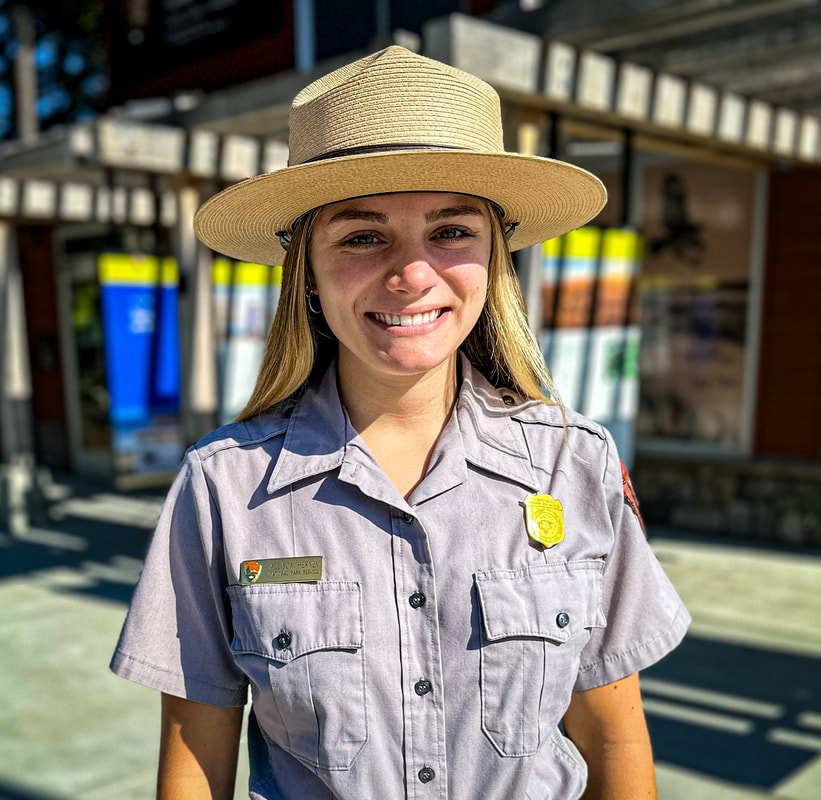 National parks are renowned for their abundant biodiversity and unwavering conservation efforts. What drives your passion to dedicate your time and skills towards safeguarding and preserving these natural resources? In what ways do you envision yourself making a meaningful difference as an employee in a national park? As an interpretive park ranger, it is my duty to help visitors understand why natural resources are important, and why they are protected. I find passion in teaching visitors about our resources and helping them find a connection with them. Through this, they are encouraged and driven to be courteous and respectful when visiting our park. A meaningful difference that I make almost every day is inspiring people of all ages to find something in the park that they connect with, and that they will remember for the rest of their lives. Providing families with forever memories is what makes me excited to come to work every day. What aspect of working at SJINHP do you find most enjoyable? Additionally, do you have a preferred spot within the park where you like to unwind and rejuvenate after a long day's work? I love being able to connect people with nature. Being out in the park every day has given me many opportunities to speak with people visiting from all over the world, where I am able to educate them on the park's resources, and help them find a meaningful, and personal connection to this place. After work I like to relax on the beach at Grandma's Cove and watch the Harbor Seal's "people watch". Have you encountered any unexpectedly remarkable animal or visitor experiences during your time at the park? At the beginning of the summer, I watched a fox hunt a rabbit in the prairie. Once the rabbit was captured, another fox came along to fight for the rabbit. Seconds later, a bald eagle swooped in, and began to fight both of the foxes for the rabbit. The second fox won, although it did walk away with a few battle wounds. Prior to joining SJINHP, what professional endeavors did you pursue? How do you believe the trajectory of your life led you to this point? Moreover, what specifically attracted you to the captivating allure of San Juan Island? I worked as a seasonal Park Guide at Indiana Dunes National Park for the past 2 summers, while finishing my degree in Environmental Science at Carthage College. After graduating in December, I moved out here for a permanent Interpretive Park Ranger position. What attracted me the most to San Juan Island was the beauty of not only the island, but the Pacific Northwest. The small town, the inviting and accepting people, the Salish Sea, and this beautiful park are just a few of the things that made it so easy to move so far from home. Steven 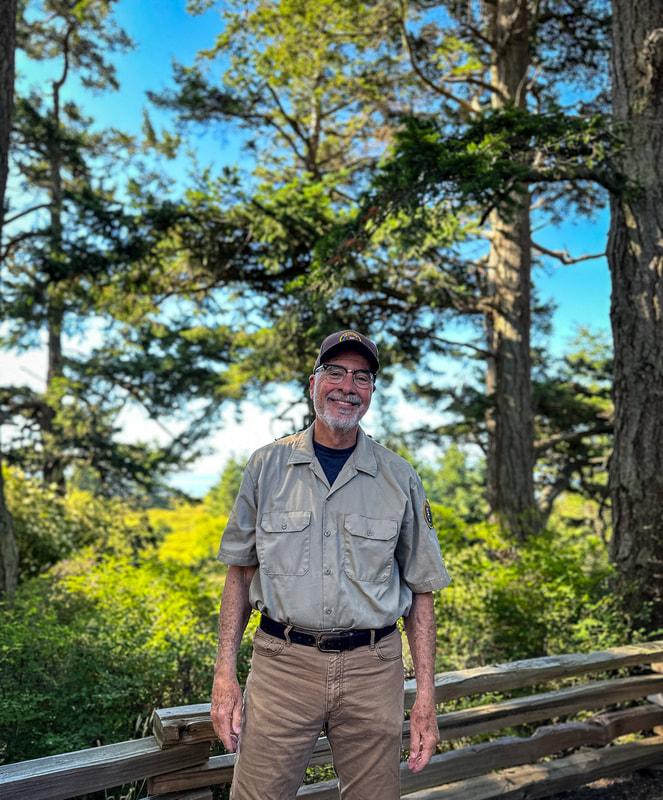 Thanks, Saani National parks are renowned for their abundant biodiversity and unwavering conservation efforts. What drives your passion to dedicate your time and skills towards safeguarding and preserving these natural resources? In what ways do you envision yourself making a meaningful difference as a volunteer in a national park? I began backpacking in my early 20’s with two of my closest friends who I’ve known since middle school in Columbus, Georgia. What was at first weekend and holiday treks into the nearby mountains of north Georgia, North Carolina and Tennessee quickly expanded to vacations out west, particularly in Washington State, with a number of backpacking treks along portions of the Wonderland Trail in Mount Rainier National Park. For that reason, Mount Rainier is my favorite National Park. I have a lot of great memories of walking with friends there. My son and I backpacked the entire Wonderland Trail in the park just before he left for university a few years back. All these backpacking experiences in many remote and beautiful pristine wilderness areas within our national parks created in me a reverence and appreciation for the Park Service both as stewards of our national treasures and as places where an individual can seek solace and renewal while communing with nature. I’m unsure how to quantify what my addition as a Volunteer in Park (V.I.P. ) will mean. What came to mind after being in San Juan Island National Historical Park for a short time was a desire to be useful in as many ways as possible. For me that’s meant having a baseline knowledge of the park including the history and the flora and fauna, but also using skills I acquired as a landscaper in my early twenties to assist maintenance with the grounds around the American Camp Visitors’ Center. If there’s a need, and if I have an ability, maybe I can assist. What aspect of working at SJINHP do you find most enjoyable? Additionally, do you have a preferred spot within the park where you like to unwind and rejuvenate after a long day's work? I suppose my favorite aspect of being a V.I.P. is the interaction with visitors who have come from all over the world. I’ve enjoyed manning the wildlife viewing station which we set up each weekend to allow visitors to see the foxes, eagles, ospreys and rabbits up close while keeping the protected native prairie intact. I also really enjoy assisting maintenance with keeping the American Camp Visitors’ Center welcoming. While there are many places one might choose as a favorite spot within the park, mine is our campsite in American Camp. We have a truly wonderful view of the Salish Sea and the Olympic Mountain Range and it offers a great place for us to relax and unwind in the shade of Douglas firs and cool ocean breezes. Have you encountered any unexpectedly remarkable animal or visitor experiences during your time at the park? The foxes, rabbits and bald eagles and their interactions on the prairie at American Camp are almost always remarkable. A few days back another V.I.P., Andy, and I were discussing how fortunate we are to have been chosen for work here. He mentioned how it’s really great to visit a national park, but to live in a national park is truly extraordinary. Living in San Juan Island National Historical Park has allowed me to be in close proximity to foxes raising their kits in a dangerous environment populated by bald eagles preying on fox kits and the prey of foxes trying to feed their kits. The photographer in me also appreciates learning the habits of these creatures making it easier to make great images of the interplay between them. Being patient and keeping a respectful distance from wild animals has also been reinforced. I can’t always get the best image with my limited camera lens, but if I’m patient and because I live here, opportunities will present themselves. Prior to joining SJINHP, what professional endeavors did you pursue? How do you believe the trajectory of your life led you to this point? Moreover, what specifically attracted you to the captivating allure of San Juan Island? I have a Bachelor of Arts degree in Sociology and a Juris Doctorate. I practiced law for a number of years before becoming our family’s state-at-home dad. I’ve always maintained that one should try hard not to become stuck in time. In choices of food, music or leisure activities I’ve attempted to have an eclectic palate, to try new things. After experiencing full time travel for a few years now, I realize the value of placing yourself in a position to pivot quickly should a great opportunity present itself. I wish there was a great story behind how Melanie and I landed here, but the truth is we were beginning to plan for a summer traveling in Alaska when we received a message from a good friend, Nancy, in LaConner, Washington about the V.I.P. position here. We looked at the island and the National Park on-line and were impressed with the biodiversity, the natural beauty, and the climate and decided we could enjoy being here. As full time travelers, we hardly ever plan too far in advance with reservations, etc., so we were able to make the decision to defer an Alaskan adventure until later. We are both very happy with the decision. 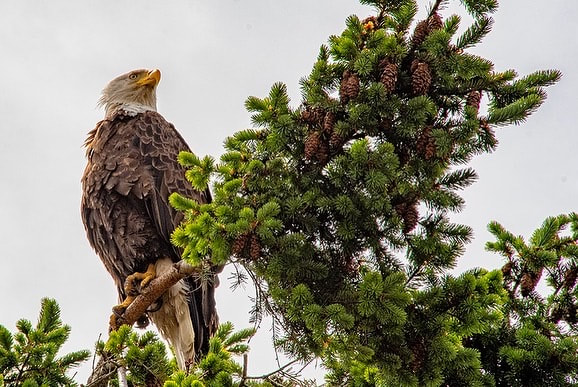 American Camp, San Juan Island National Historical Park * Melanie and I were having a glass of wine one aftermoon at an establishment in Friday Harbor, Washington, San Juan Island, when I struck up a conversation with a person who subsequently identified himself as Ray Jackson, Mayor of Friday Harbor. Among other things he told us, he said he was never going back to America. He would live out his life on San Juan Island.
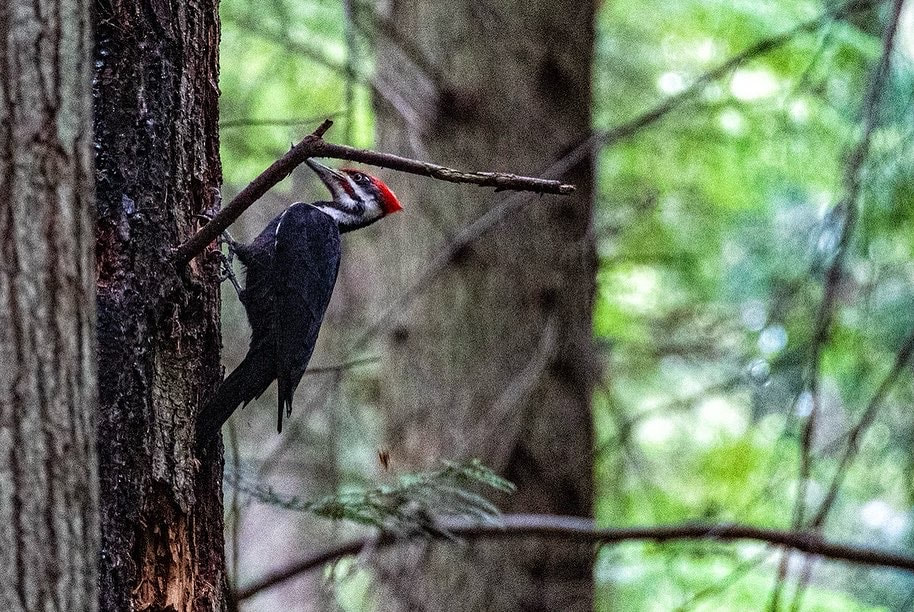
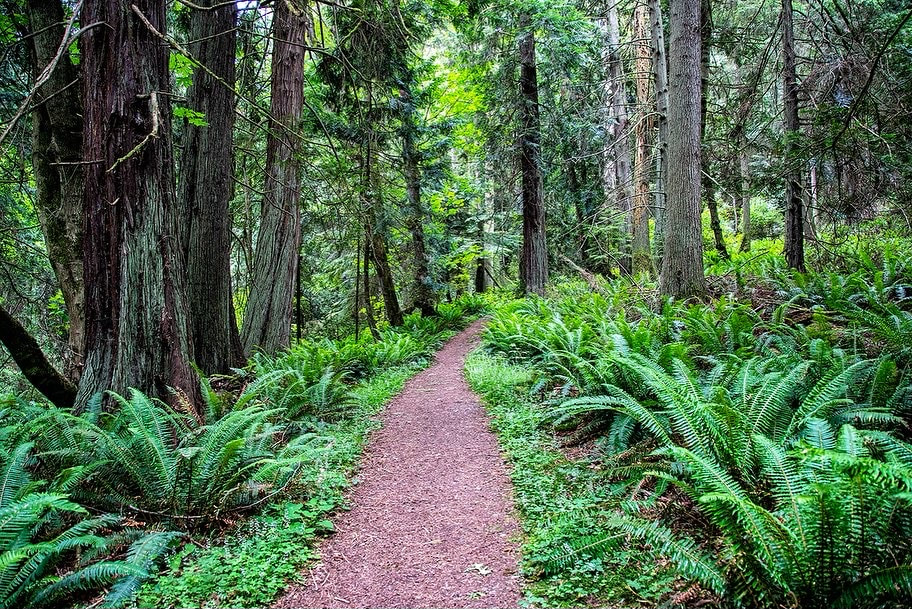
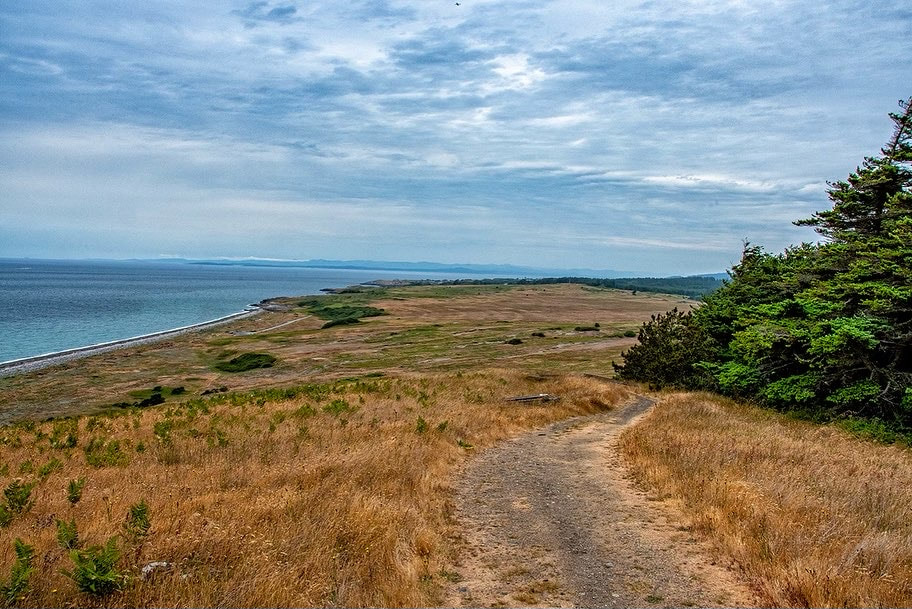
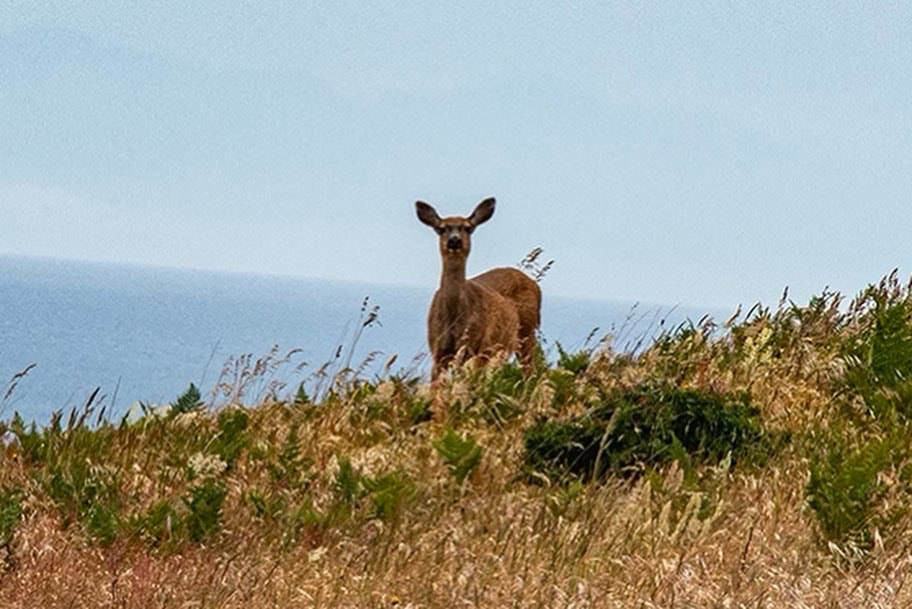
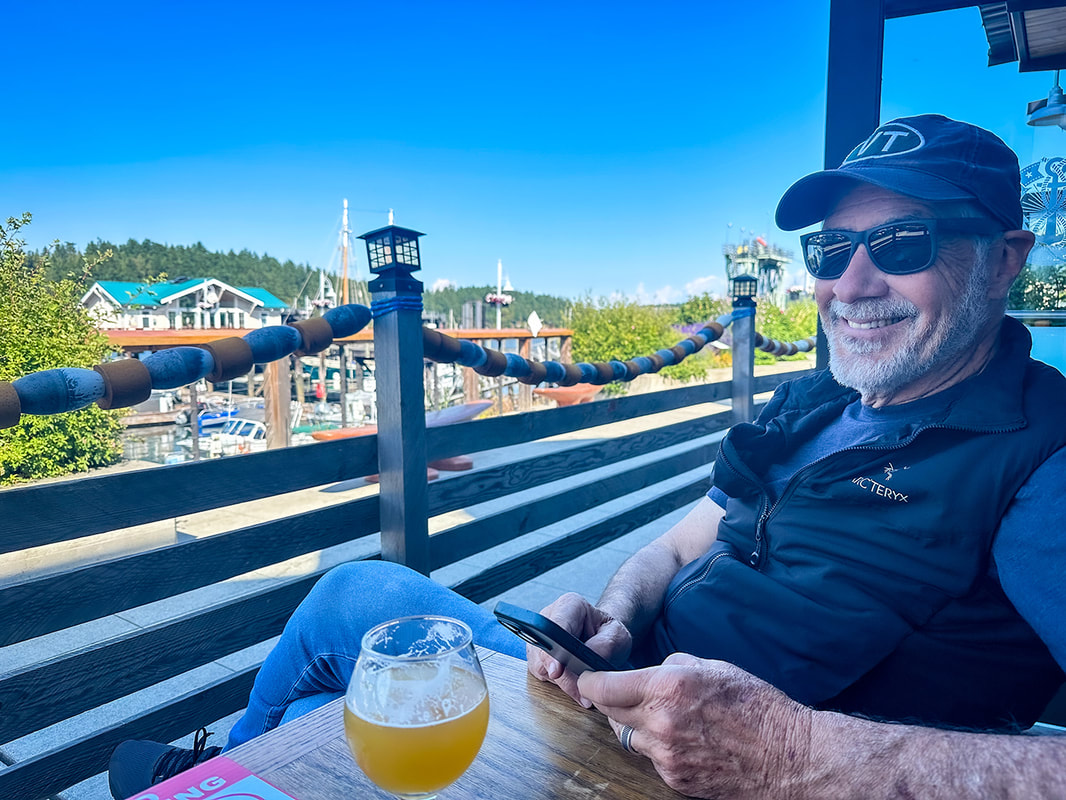
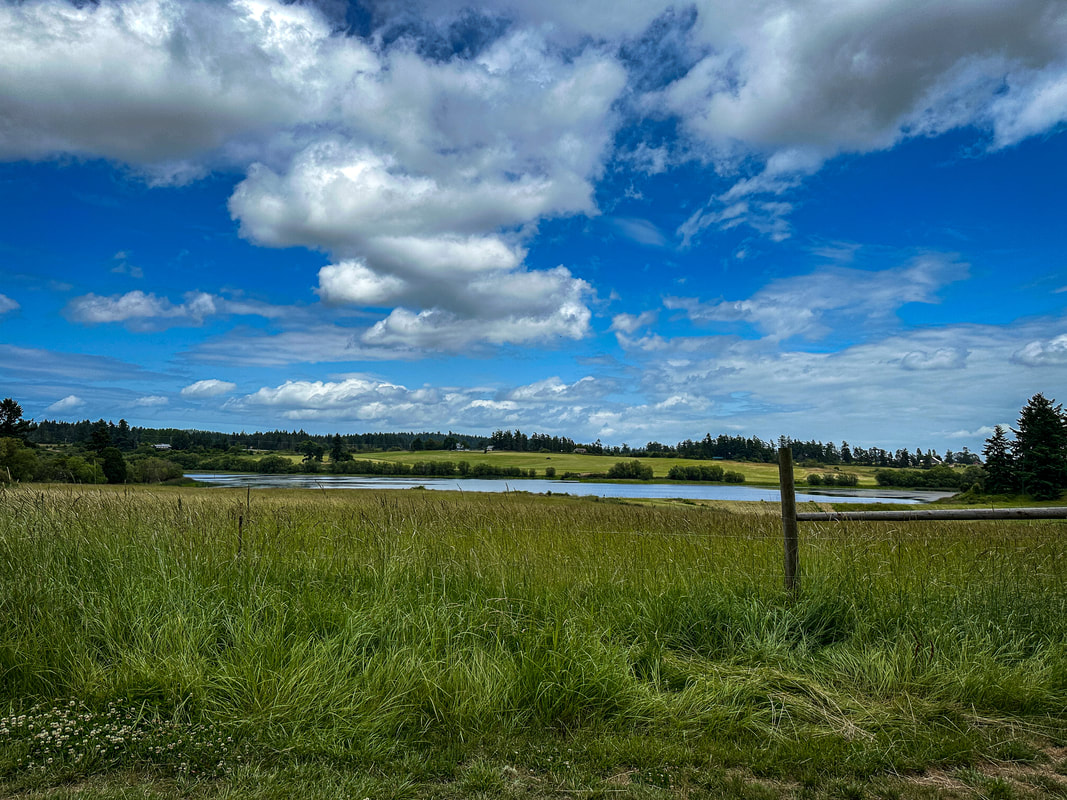
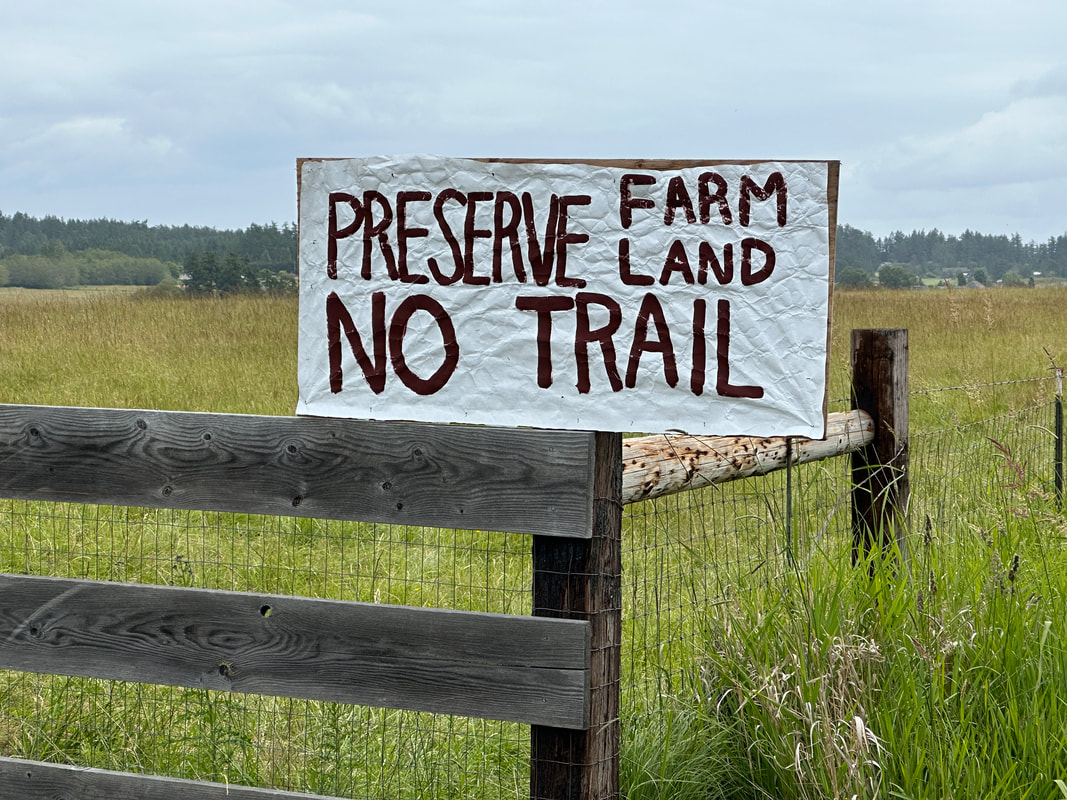
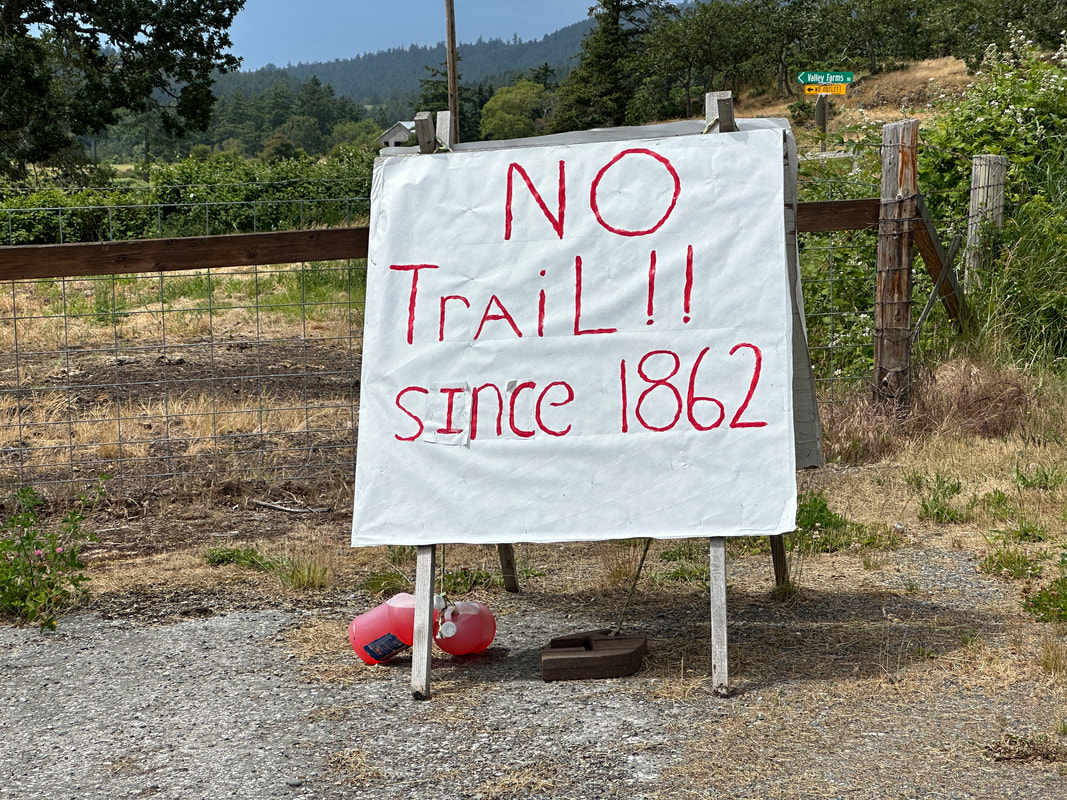
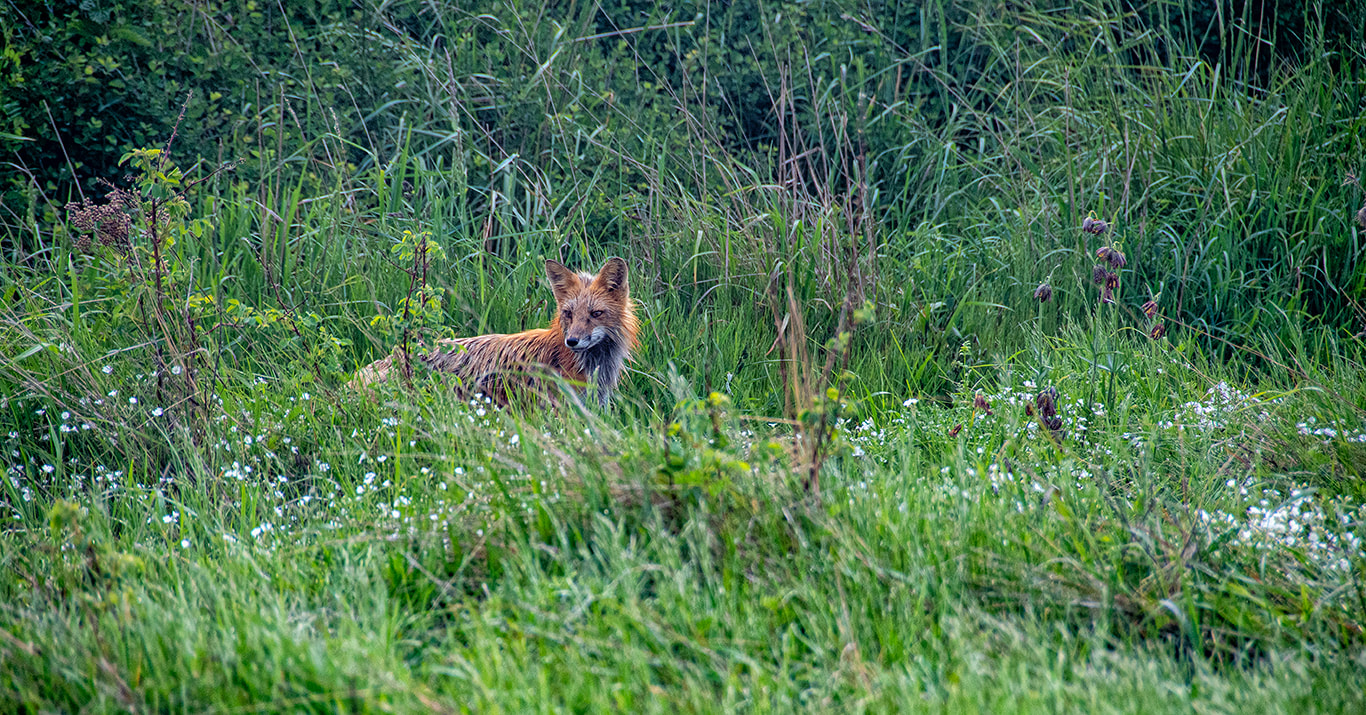
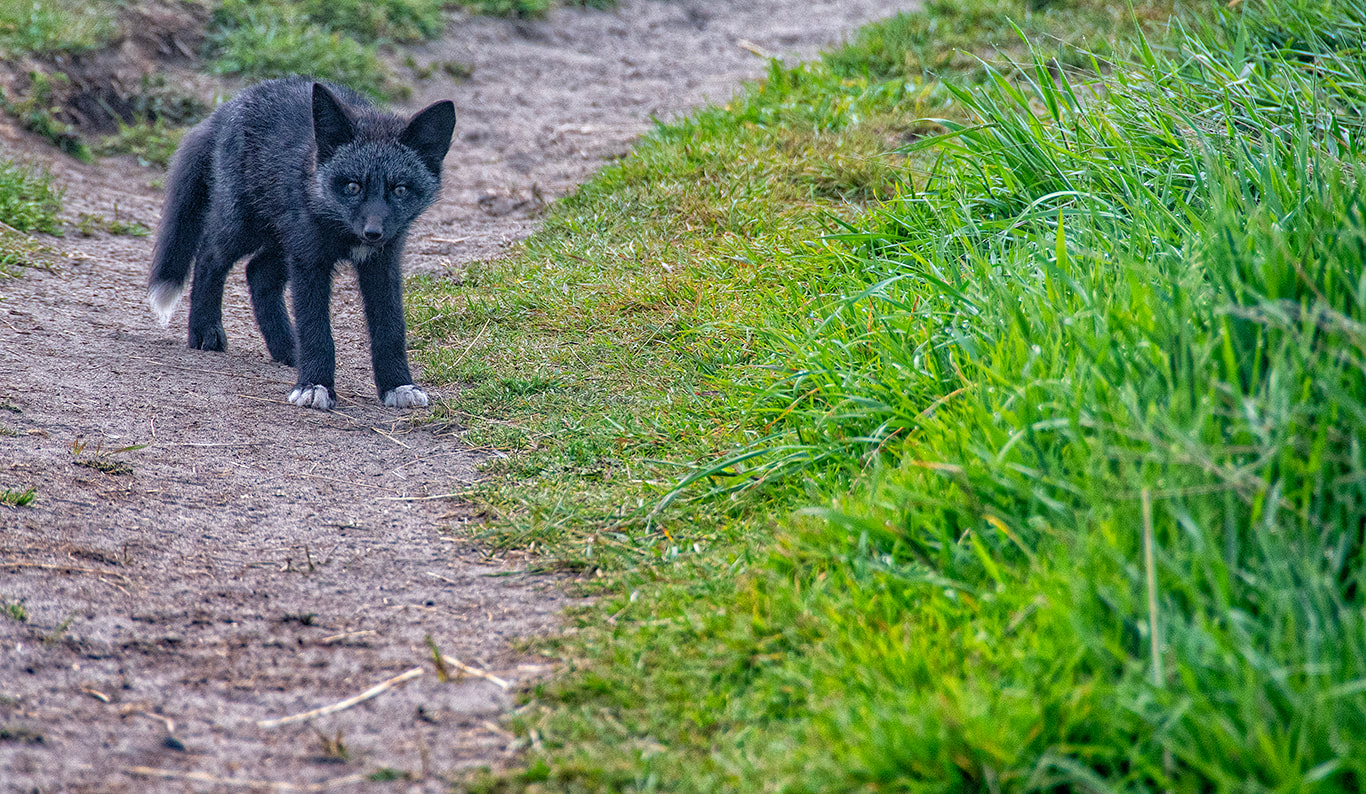
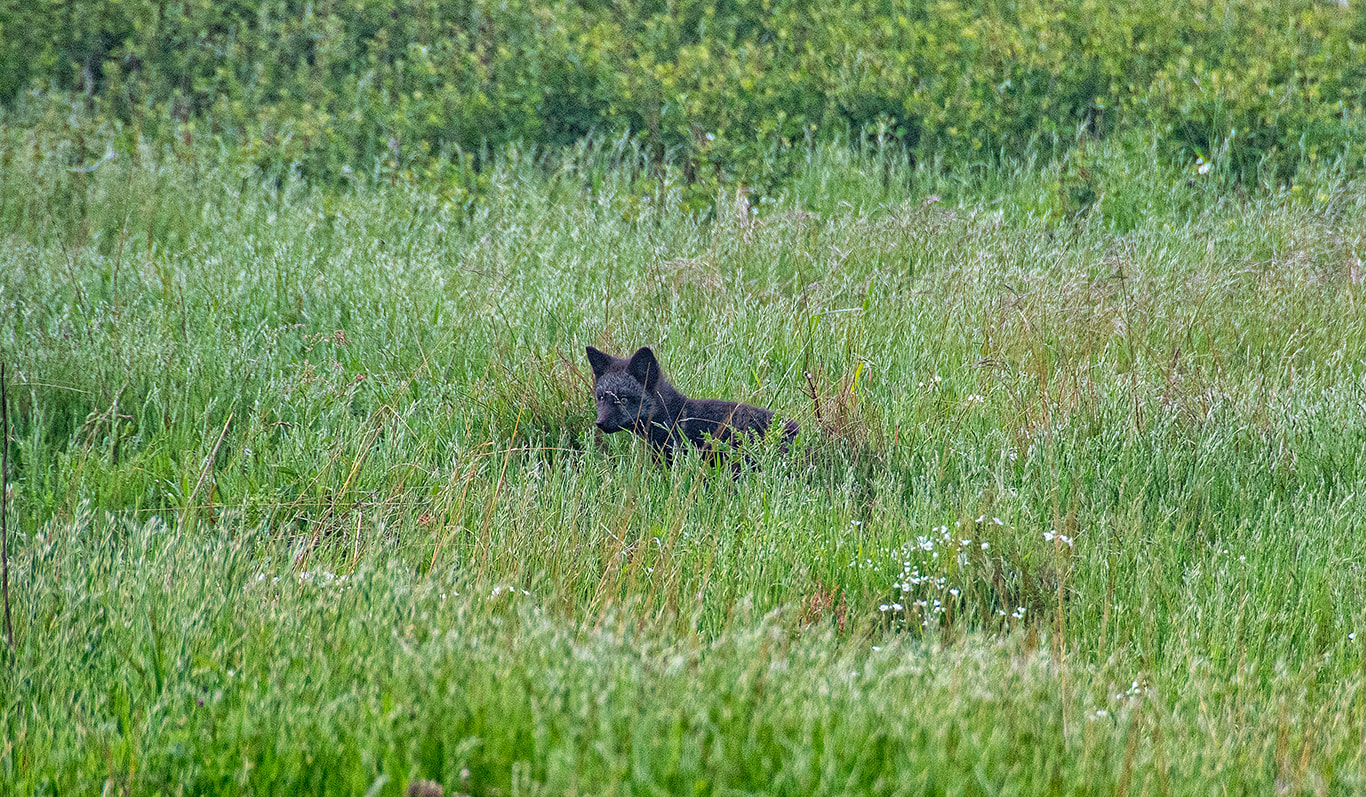
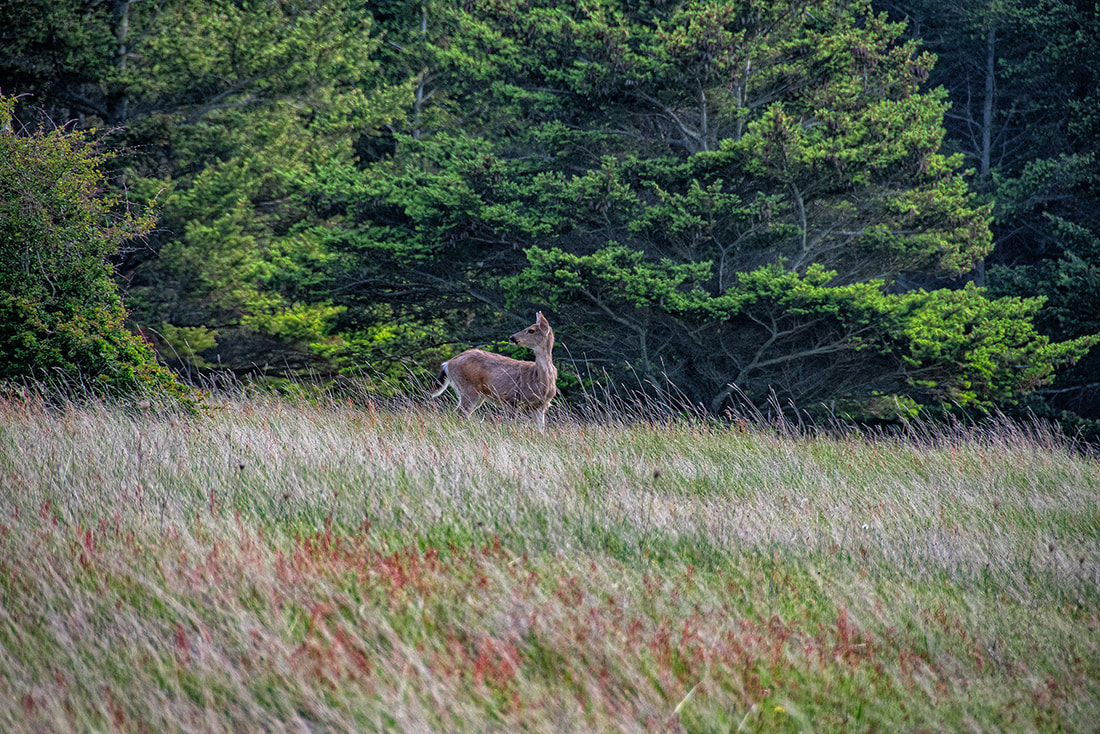
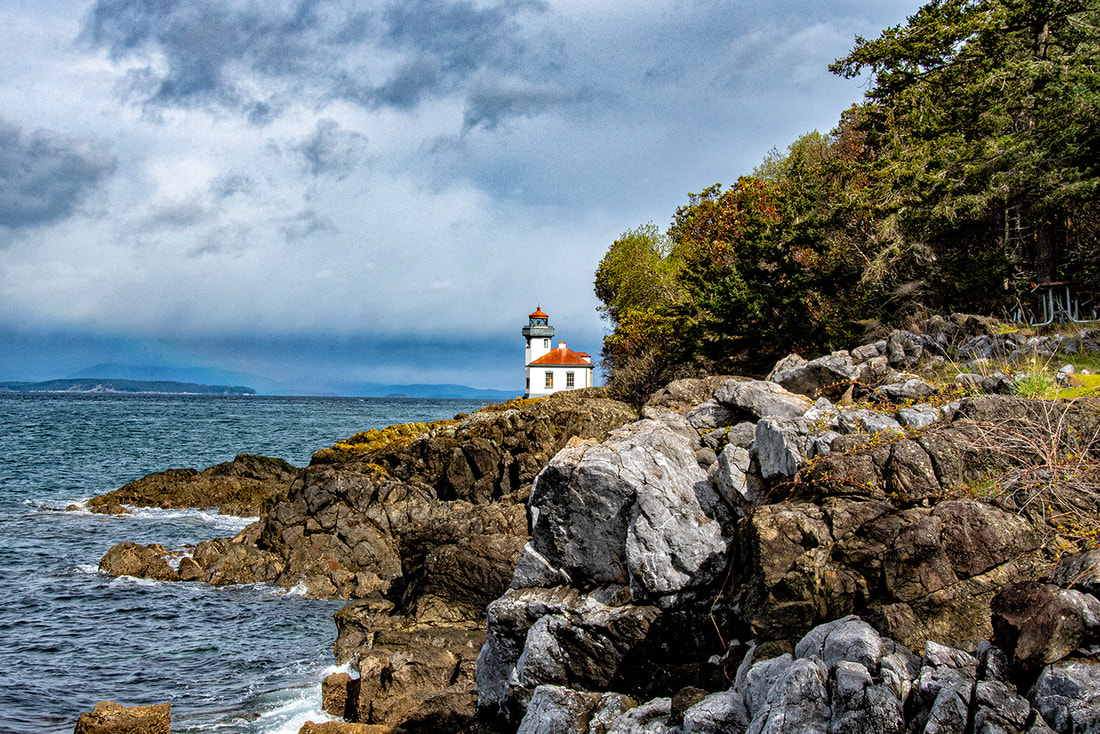
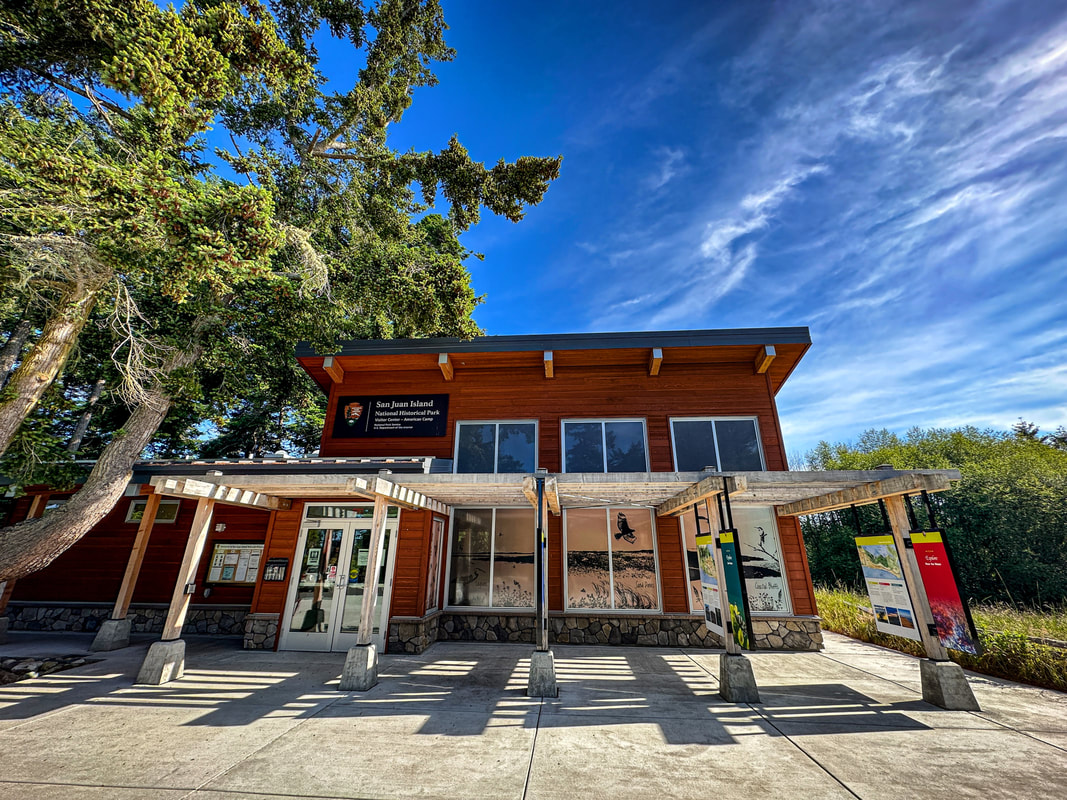 American Camp Visitors Center Steven While we haven't yet reached the longest period of time we've spent in one place while full time traveling, we are fast approaching critical mass in that respect. And Summer. The weather on San Juan Island has been nothing short of spectacular. Well, spectacular depending on your idea of what that means exactly. If you are looking to sunbathe, take leisurely swims in the ocean and spend your days in 90+ degree temps with high relative humidity, then prolly not so much. While we've had days in the 70's and reached low 80's maybe once or twice, the temperatures here have, generally speaking, been pleasantly in the 60's during the day and low 50's at night with the occasion low reaching into the upper 40's. For us those temps are pretty amazing, especially for May and June. Days may begin with a marine layer of clouds, but by mid to late morning those clouds burn off and blue skies prevail. We've had only 3 days where rain showed up since we arrived on May 2. The "dry" season is upon us. We'll be in the 60's for the next two weeks, low tonight, 49 degrees. This is our new normal. We've settled into our volunteer positions here working at American Camp three days a week and at English Camp one day each week, leaving us three days to relax and explore the island(s). Our days in American Camp are generally divided between the great relatively new Visitors' Center and roving the park engaging visitors as we meet them on the trails or at the wildlife viewing station we set up overlooking the protected prairie. I also spend time assisting our landscape maintenance crew with keeping the Visitor Center looking great. We're also quickly finding out how truly wonderful spending an extended period of time in a National Park is for living with wild creatures who inhabit the area. Our resident Red Foxes are a big draw for visitors to the park. Many of our visitors have never seen a fox in the wild and our open prairie affords them an opportunity to see them hunting the plentiful rabbits, voles, snakes, insects and mice, among the items on the local menu for these omnivores. Many days photographers from places all over the world can be seen with their long lenses focused on the prairie. While the foxes are not protected by San Juan National Historical Park, the native prairie and grasslands are protected and visitors are no longer allowed to walk over it, with the added advantage of giving the foxes enough space to remain wild and raise their kits in relative peace. That's not to say there are no opportunities to hike. There are at least 7 trails offering wonderful vistas of the prairie and grasslands along with the Salish Sea and Olympic Mountain range. Melanie and I roved the Mount Finlayson Loop Trail a few days back where you can experience a walk through a really nice second growth forest of Douglas Fir. While most all trees were logged when the Lime Kilns were operating into the early 1900's, the Finlayson Loop Trail offers a great example of how some of these forests are making a comeback. On our hike we saw a Pileated Woodpecker and Black Tailed Deer. The trail offers great vistas of the prairie, grasslands, Salish Sea, and Olympic Mountains. 6/27/23 Melanie has asked me several times within the past few days when we might publish again. Life happens, volunteer duties happen and time slips by when you're enjoying island time. Since my last attempt at catching us up on our joint journaling of our time here on San Juan Island, two weeks have passed. We've made the conscious decision to remain on island, with one forced exception, during that time choosing to explore additional parts of the island and familiarizing ourselves with Friday Harbor. We regularly ride the 5 miles into Friday Harbor for light grocery shopping, a meal or a beer. More on our favorite places to eat and drink later. We traveled to Tacoma, Washington just over a week ago to finish background check requirements for the National Park Service. Being late hires for this season has complicated the onboarding process, but hopefully all of that is behind us now. Besides, the ferry ride to Anacortes, Washington is a treat and we picked up fresh strawberries and scones in La Conner on the way. Costco happened to be within a few miles of our destination in Tacoma so we resupplied there too. Turns out we were fortunate our returning ferry made it back to Friday Harbor. It was out of service after it reached the island. Seems the ferries have been inconsistent at best this season. There are various explanations for this, but as you may imagine, both visitors and residents aren't happy when plans are ruined or delayed because the ferry isn't on time or operating at all. Finally, what would a small mostly rural island community be without a bit of controversy? While I don't know all the nuances of the issue, a multi-use trail has been proposed and funding procured that will take people from Friday Harbor to Zylstra Lake Preserve about 3 miles out of town. Much of the land is agricultural and while money is appropriated for purchase of the right-of-way and construction of the trail, landowners are pretty much unanimous in their opposition. I've taken to asking residents about the "No Trail" signs along San Juan Valley Road that landowners have posted a few miles before the Preserve that advocate against the trail. Suffice it to say I've gotten mostly inconsistent answers to my question. Few know much about the trail, where it will be located or why exactly residents along the road oppose it. Word on the street is there's a compromise in the works. 6/27/23 Melanie We are learning so much, and making new friends who are quite generous with their wisdom and resources. Ranger Jeff brought us watermelon for lunch one day while we picnicked at English Camp; Superintendent Lex brought us lettuces she'd grown in her garden and fresh eggs just brought in from her chicken coop; Ranger Cyrus has given us home baked goods (many made with berries and stone fruits he has foraged on the island) almost every day we have worked with him; and Ranger Allison has plied us with brownies. It's not enough that they show us this hospitality and their gratitude with such offerings, but they demonstrate their deep love of this island, our Park, and all of the creatures who live here with us by teaching us about all of it so we can share with the visitors we come into contact with. The enthusiasm is contagious, and I'm grateful every day for the chance to understand more and to give it away to fellow seekers. And, it is a very small world. One day last week as I was swearing in a new Junior Ranger named Gabe down at English Camp, Gabe's father asked me what I knew about the church services that would have been held there during the occupation. He explained that he was an Episcopalian, and that he figured they had Anglican services somewhere at the Camp. I told him that I did not know, but as I reached for our resource book to look for an answer to his question, I told him that my immediate past work had been as Executive Director of Episcopal Peace Fellowship. He said, "Well, perhaps you know my father, the Rev. Bob Davidson, who is retired as National Chair of EPF". At that I jumped up and ran around the desk to hug this stranger's neck. I said, "Know him? Father Bob hired me as ED of EPF!" I had, happily and unwittingly, just made Bob's grandson, Gabe, a Junior Ranger. We took photos and visited and made plans to try to see one another again in August when Fr. Bob and his wife, Linda, as well as Kyle's family (who live in Bellingham), return to the San Juans for vacation. I never did answer Kyle's question about the church services, but I will find the answer and write him next time I am at English Camp. 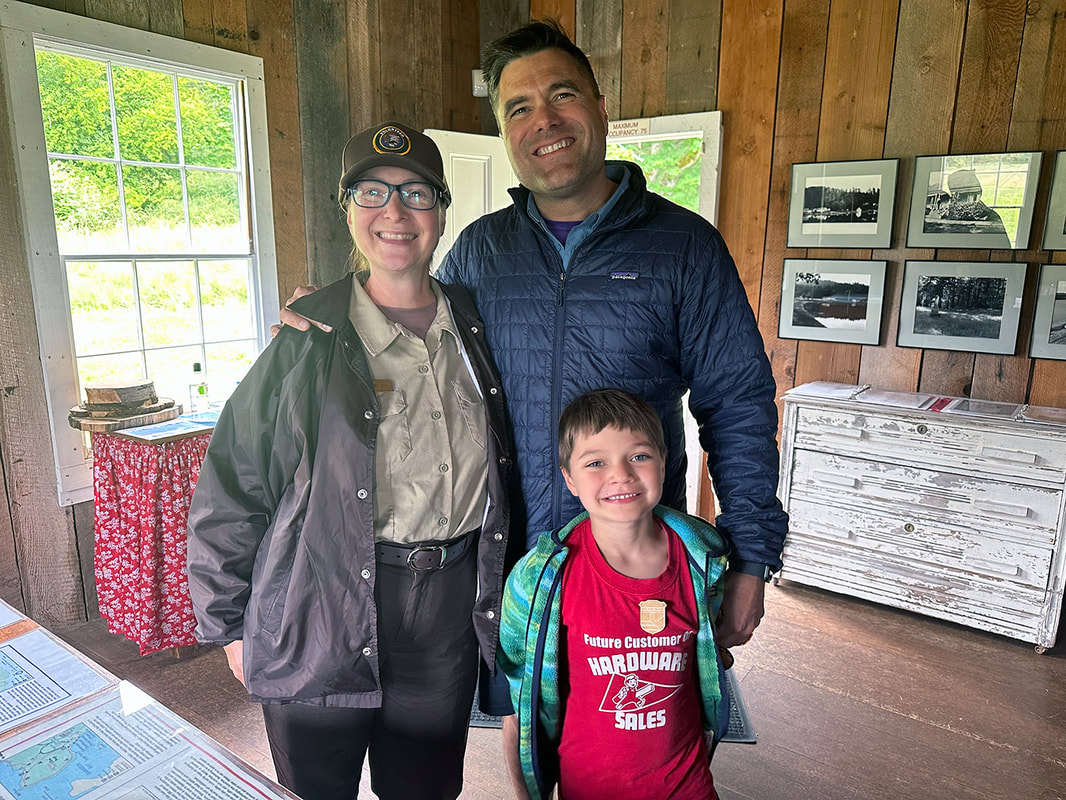 Melanie, Kyle and Gabe 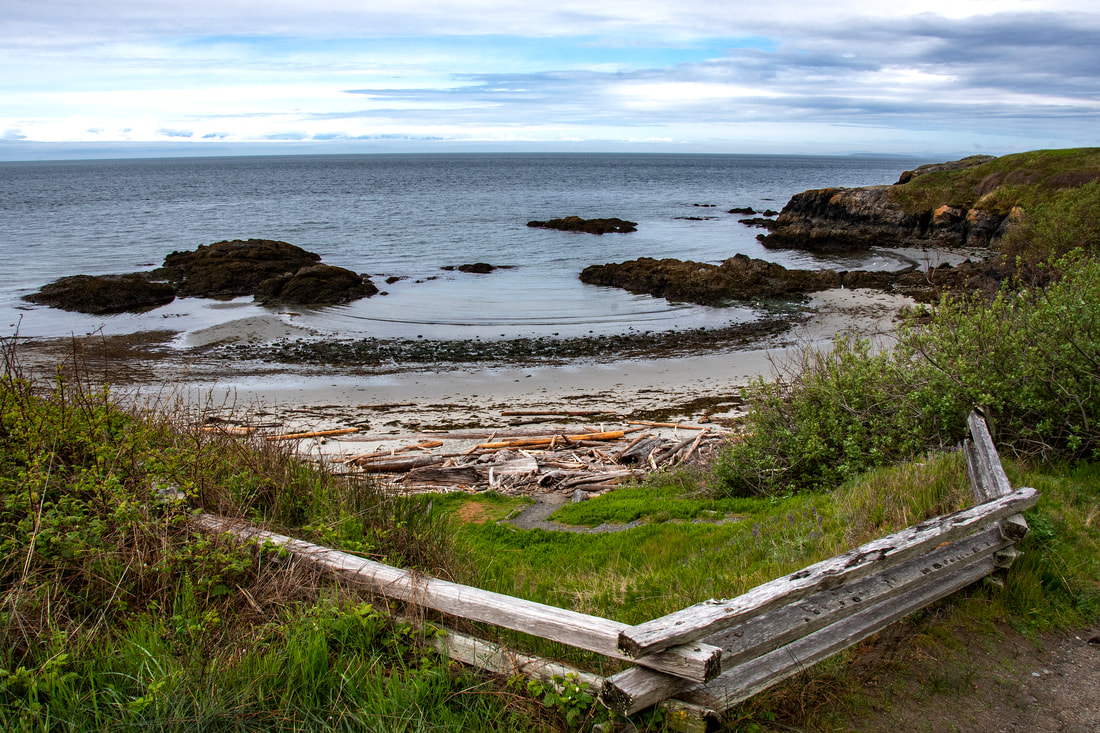 Grandmas Cove, San Juan Island National Historical Park Steven We are, all of us, creatures. We belong to this gorgeous world in all the same ways that the [foxes on the prairie] belong to this world. In all the same ways that the fog-shrouded trees belong to this world. You may come someday to feel trapped in asphalt and concrete, but you are not trapped. When you are restless or lonely or afraid, go for a walk in the park or a hike in the woods. Plant a little garden, if only in pots on the sidewalk. Being in the wild world will make you feel better. Get your hands dirty. I promise you will feel better. And merely by falling in love with the world, you will begin to make it better. Human beings will work to their dying breath to save something they love. Fall in love with the wild world, and you are taking the first step toward saving it. The world is beautiful. People are good.--Margaret Renkl, New York Times Good morning from American Camp, San Juan Island National Historical Park, where we've now been in residence for two weeks. Melanie and I are truly fortunate that the National Park Service has, in exchange for our volunteer services, provided us with a great spot to camp with a spectacular view of the Salish Sea and Olympic Mountain Range to our west. So much has happened in our two weeks here that it's a bit difficult to know where to start. We officially opened American Camp visitors' center on Saturday, May 13th. English Camp will officially open this coming Saturday, May 20th. We had two more days of training for V.I.P.s the beginning of last week before we began work Saturday past. The dedication of and the depth and breadth of our park service rangers' knowledge about San Juan Island National Historical Park is humbling. There are historians, biologists, botanists, geologists, and tribal liaison between the park and Coast Salish peoples, among other specialists. While I'm not sure how much of what was presented I've retained (I'm definitely the weak link between me and Melanie in that regard), I'm certain as our season here progresses, we'll be able to use much of the information provided us to assist park visitors in their enjoyment of this national park treasure. The Pig War and an emphasis on the value of negotiation over war in resolving conflict is the reason the park was established in 1966, but our Superintendent, Elexis (Lex) Fredy, was clear in sharing with us volunteers that the indigenous peoples -- the Coast Salish tribes -- are an integral part of the park's and the island's history. The new visitor's center at American Camp contains thoughtful exhibits to this end. At English Camp, a Reefnet Captain Pole and two Salmon Story Boards are there to remind visitors that indigenous people lived on the land for centuries before the English set up camp there. The Captain Pole was carved by Temosen Charles Elliott, Tsartlip, and the Story Boards by Jewell Praying Wolf James, Lummi. 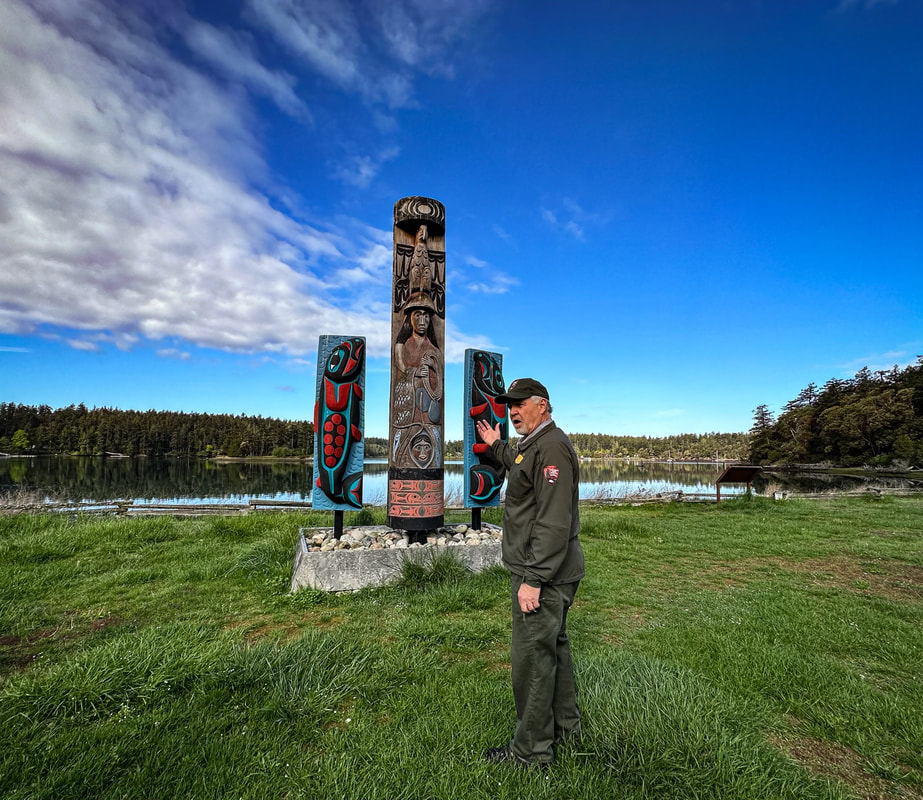 Ranger Jeffery Hodge gives an overview of the Captain Pole and Salmon Boards for V.I.P.s Our volunteer days have been divided thus far between the American Camp visitors center and a wildlife viewing station we will set up on Friday, Saturday and Sunday each week. The brainchild of Ranger Allison Herkey, the viewing station allows visitors to view wildlife in the park at a proper distance and, if visitors own an iPhone, connect via hotspot to make images and movies in real time as keepsakes. On days the viewing station is not set up we'll rove the park trails for half of each work day, interacting with visitors as interpretive rangers. 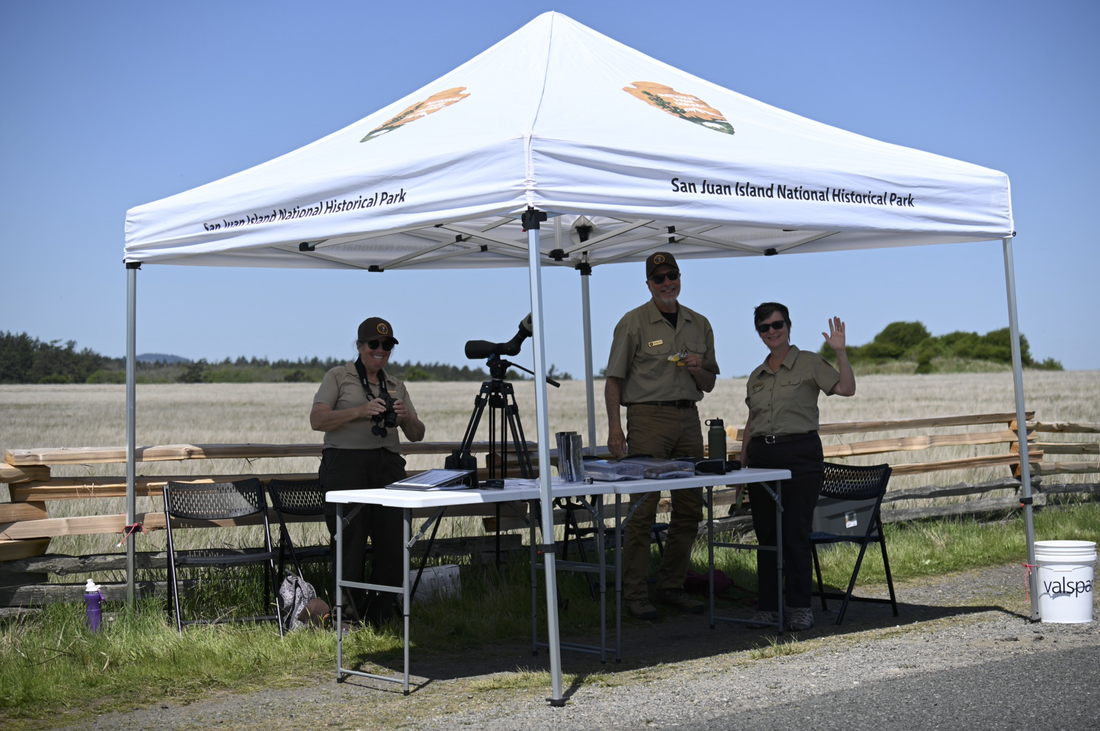 Image by Brad Pillow, San Juan Island resident, and photographer extraordinaire 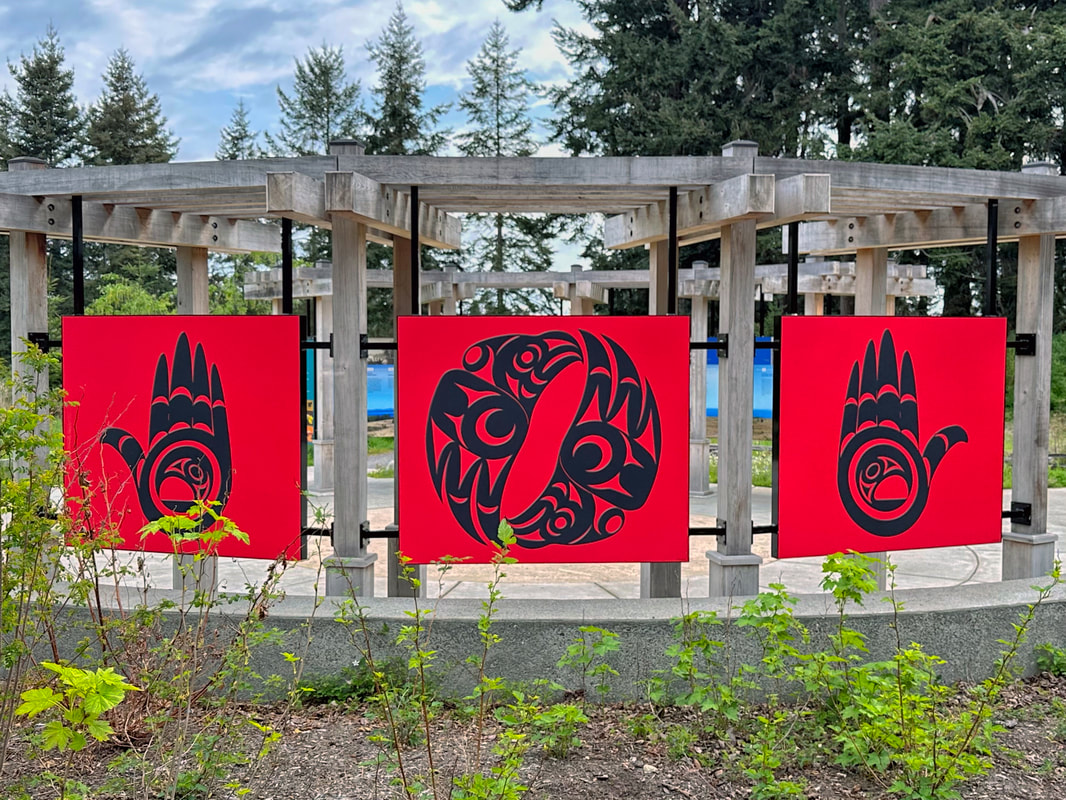 Welcome Panels at American Camp Visitors Center, Photo: Melanie Atha Melanie I'm so, so grateful for the National Park Service. San Juan Island National Historical Park commemorates "Peace Over War" in the telling of the peaceful resolution of the "crisis" around the establishment of the final boundary between the U. S. and Canada. The so called "Pig War" is remembered and is held out as a splendid example of successful diplomacy. However, the true heart of this Park is its interpretation of the indigenous peoples who inhabited this land since time immemorial, and the stunning and diverse flora and fauna of the land and sea found in this Eden. The new Visitors' Center at American Camp is but two years old, and it is thoughtfully curated in collaboration with leadership from the various Coast Salish peoples. In fact, you could fairly say that it is indigenous-centric. My love affair with the National Park Service began in my youth when I first visited the Great Smoky Mountains National Park. When I started working and traveling for Episcopal Peace Fellowship, Steven and I began visiting the National Parks in earnest, and I firmly believe that the Park system is one of the few ways our federal government effectively demonstrates its love for the American people and her resources. In 2019, we had the life-changing opportunity to be at Fort Monroe National Historical Park for the 400th anniversary of the first slave ship landing at Point Comfort, and I wrote a short love note about the experience HERE. The image above captures a gesture of welcome which I have experienced first hand at a gathering of the Swinomish over near what we call LaConner, WA last month. I was thrilled to find the raised hands of gratitude and honor as one of the first things visitors to American Camp see -- signaling to all who come in that this is a National Park which celebrates all the lives which have been nurtured here, have thrived here, and still have connection to this holy paradise. Our work this summer will include supporting the rangers who are protecting the endangered Island Marble Butterfly, educating visitors about the rare prairie at American Camp and the animals who call it home, and, of course, more broadly helping a new generation of visitors to fall in love with the National Park Service and its mission. 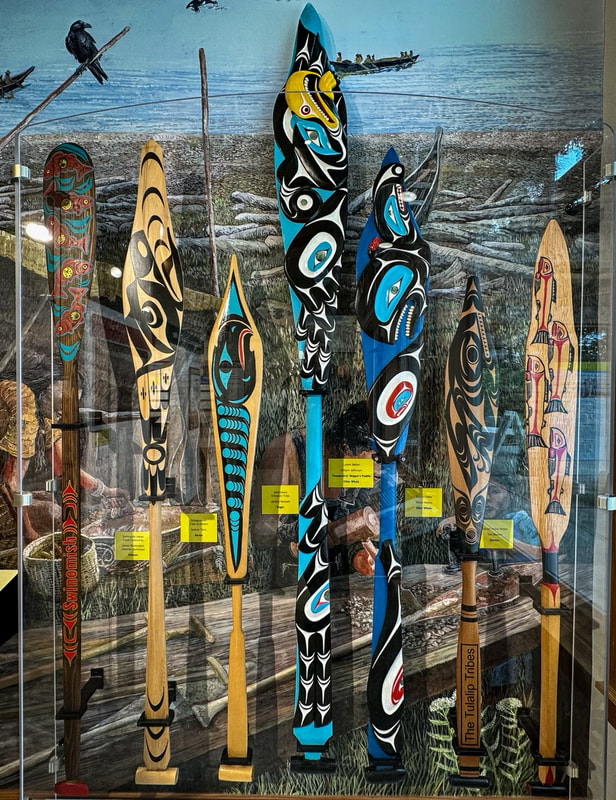 Artists selected by the Coast Salish tribes were invited to create ceremonial paddles to honor the creatures of the land and sea who inhabit the islands. These are exhibited in the new visitors' center at American Camp. 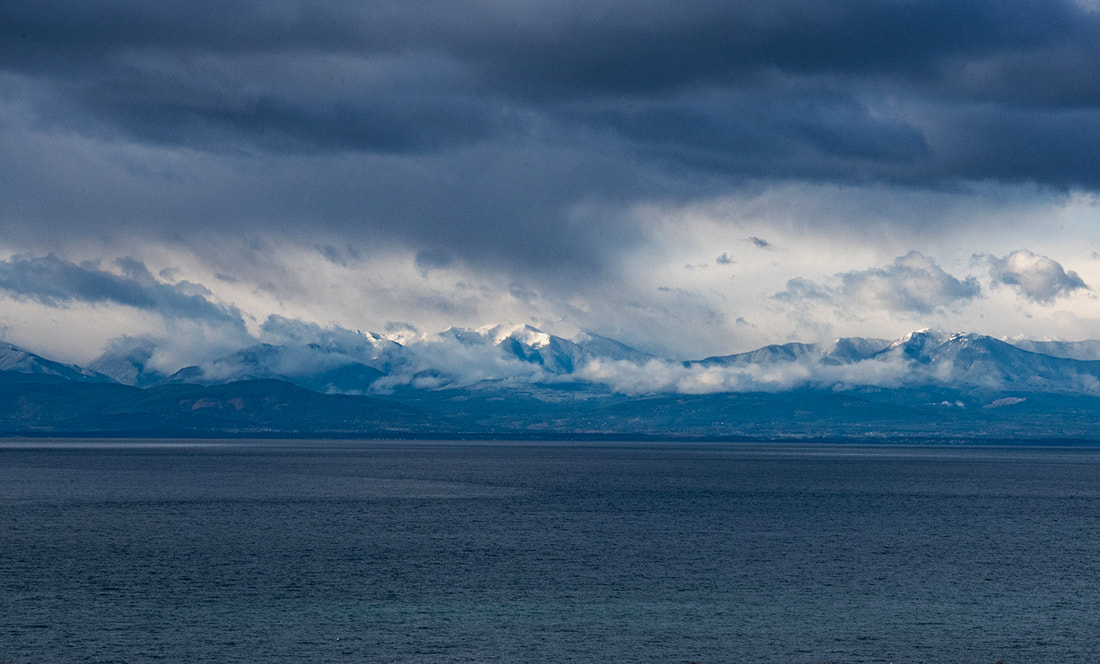 Olympic Mountain Range from American Camp Steven Greetings from San Juan Island National Historical Park. We've been located in American Camp since traveling over from Anacortes, Washington to Friday Harbor, Washington via ferry on the 2nd. Arriving early afternoon, we spent most to the rest of the day setting up camp in a more permanent fashion than we would normally. I purchased wheel covers for the sprinter and a bike cover for our electric assist bikes anticipating we'd want easier access to the bikes than storing them in our KOMO carrier gives us. Ranger Jeff gave me the code to the tool storage shed and I was able to rake and clean up debris from both our campsite, our neighbors' site (they'd not yet arrived) and our driveway. We even swept the porch of the rearing lab for the endangered Island Marble Butterfly that sits adjacent to our campsite. Afterwards, Melanie and I enjoyed an adult beverage and our view of the Salish Sea and the Olympic Mountains across the Strait of Juan de Fuca. I believe we're going to like our five months here. On the 3rd Melanie walked down to nearby Grandma's Cove to check it out while I continued to set up camp. She came back excited at having had a seal sighting and brought a shell and a piece of sea glass for our table. We then got on the bikes and headed north along the west coast of the island. Taking False Bay Drive we took our time stopping along the way to take in the views of the Salish Sea and wild flowers. We stopped briefly at Westside Preserve and spoke with a woman from Bellingham whose daughter was visiting from North Carolina. They were watching seals. We then stopped briefly at Lime Kiln Point State Park for a restroom break. Our friend, Nancy Crowell, took us to Lime Kiln when we visited the island with her a few weeks back. That time we hiked down to the lighthouse located there and she told us the park was a great spot for Orcas sightings. Continuing on the Westside Road we rode past San Juan County Park eventually connecting with West Valley Road. From there we rode past San Juan National Historical Park (English Camp) where we will be volunteering one day a week and then on into Roche Harbor where we had lunch on the pier. After lunch we stopped briefly at San Juan Islands Sculpture Park Nature Reserve then we chose the shortest route back to American Camp (15 miles) and proceeded with our ride back home enjoying another nice spring Pacific Northwest evening. Our total ride for the day was 36 miles. Yesterday morning Melanie wanted to show me Grandma's Cove so we hiked over to the Visitor's Center at American Camp and just past it to the trail head. The trail is a half mile out and back and moderate. We saw seals, an otter and met a few local folks along the way, The wild flowers are nice and we located a spot for future sunset views this summer. We then got on our bikes and rode on Cattle Point Road south towards the Cattle Point Lighthouse, stopping along the way for a great view of the prairie where we spotted a few foxes meandering. Stopping at the trailhead of the lighthouse, we walked in towards it immediately spotting a fox who appeared to be on the hunt for something. We met a nice couple from Ann Arbor, Michigan and talked to them briefly then made our way on to the lighthouse where a bald eagle was perched on the top of it. We then cycled into Friday Harbor for lunch, picked up a few grocery items we needed and cycled back to camp. Temperatures were dropping as we approached camp so we secured things outside in anticipation of a rainy day today and moved inside for the evening. Today's been mostly a rest day as rain moved into the area after midnight and has been pretty steady throughout the morning and afternoon. We had our monthly phone call with family back east in Kentucky, something to which we always look forward. It's a good day for a bit of journaling and down time. We are eager to have a few more days to explore before we engage in more work training the first of next week. We begin our volunteer duties on the 15th. 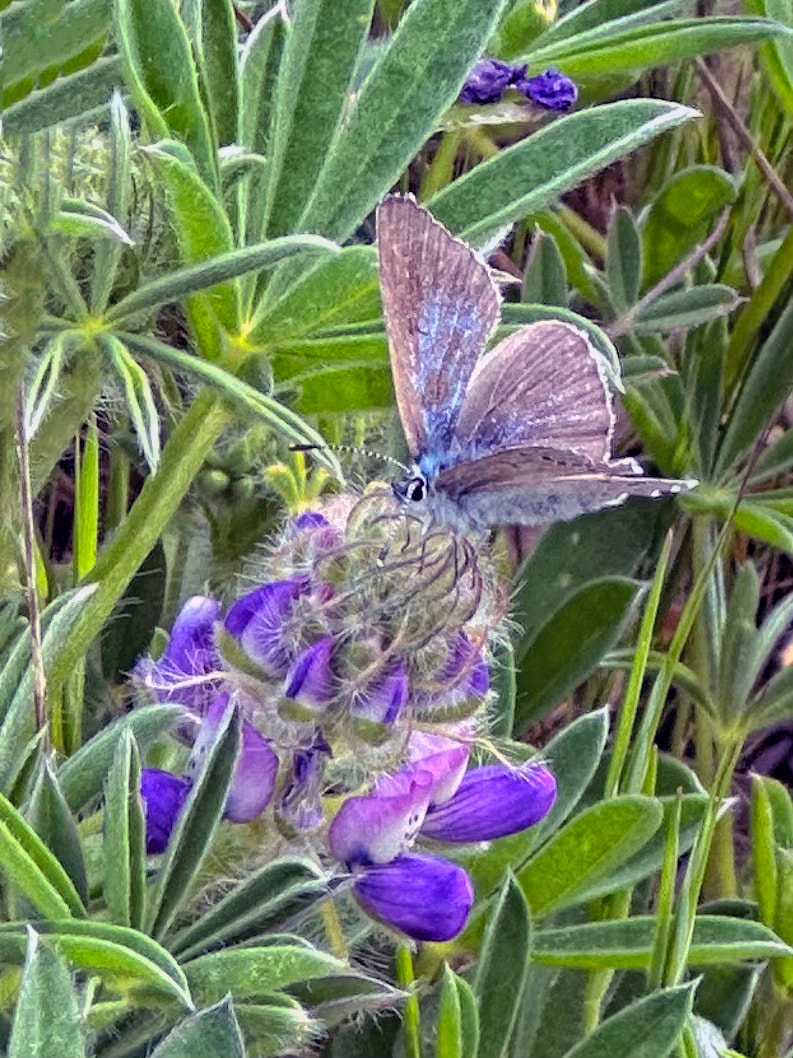 Moth along Grandma's Cove Trail Melanie
So much gratitude comes with us to this place. Our dear Nancy Crowell sent us the job listing for our VIP position back in March, and if she had not thought of us, and acted swiftly, we would not even be here. As a nature photographer, Nancy's love for this place and its creatures is all the endorsement we needed to leap with trust towards this new opportunity. She has generously shared her deep knowledge of the plants and animals of the Pacific Northwest with us -- even drove us out here for a little sneak peek a few weeks ago -- introducing us to the foxes, rabbits and bald eagles which are now our nearest neighbors. Her friendship is grace to us. It will probably take me some time before I stop thinking about her every single time I locate a red fox with the binoculars, wanting to share the moment with her and wishing I had her talent with a camera. I'm just lucky enough to be married to a very talented photographer of my own. I hope that by the end of the summer, I won't need her beside me to name the blooming things that dot the landscape. (Nancy is also a master gardener, and a patient teacher!) I'm also quite grateful that she and her husband, Michael, are just across the Sound in La Conner, WA, so we can work in some visits over the summer, perhaps even a kayak adventure to see the resident orcas. 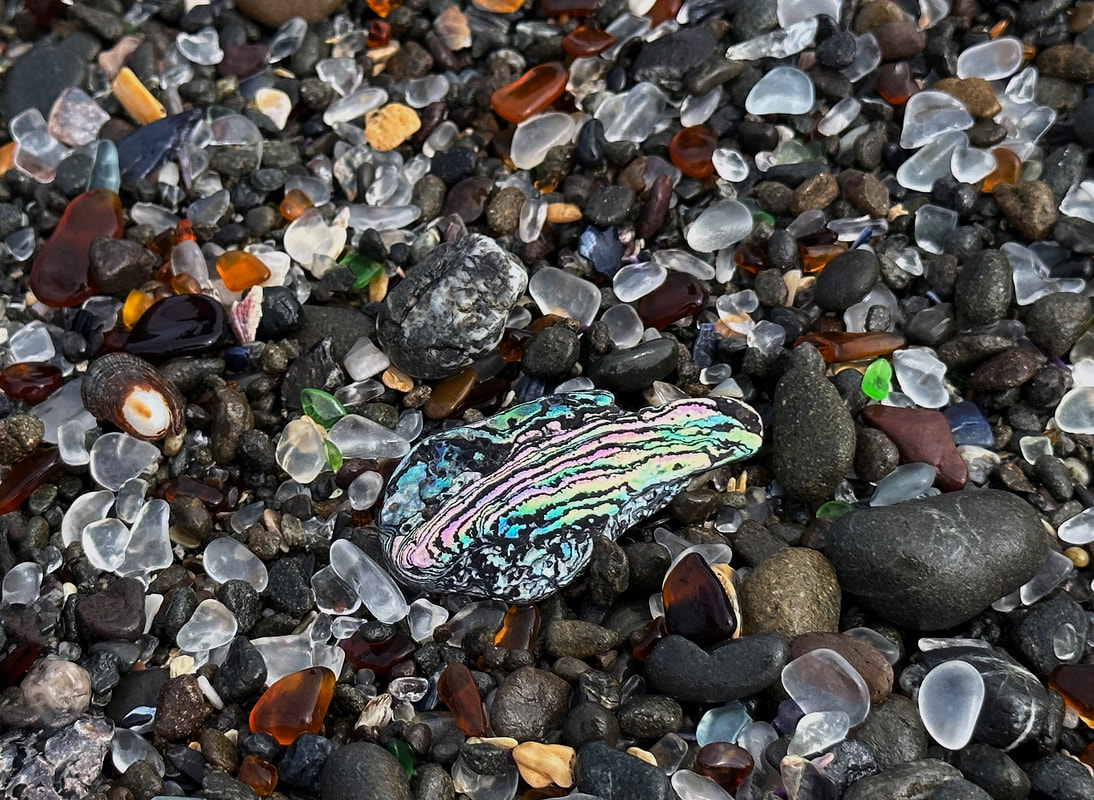 Detail, Glass Beach, Fort Bragg, California The morning of the 23rd of last month (March), our friend, Nancy who resides in La Conner, Washington sent Steven a Facebook Messenger message with a link to a Facebook posting that was recruiting for a volunteer couple for San Juan Island National Historical Park. 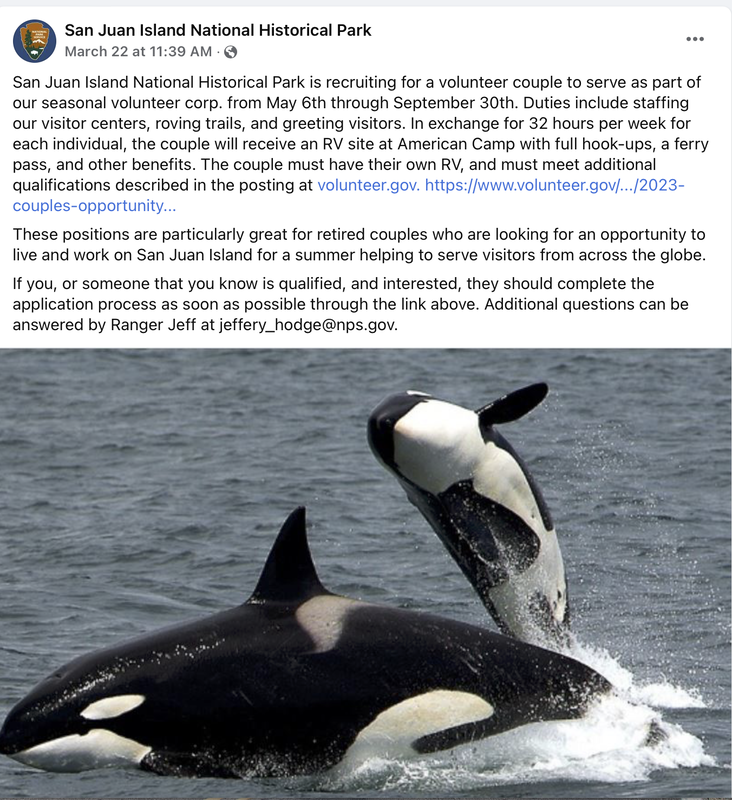 Your intrepid wandering couple, sipping their morning brew in the back of Miranda, pondered the offer for a few minutes, talked about postponing their much anticipated summer adventure to Alaska for at least another year, and agreed the offer might just be a great way to spend five months assisting the National Park Service, exploring a part of the country they love, and spending more time with those they love in the PNW. So we each got online, filled out the required application, and sent them on their way. Neither of us expected to hear back from the Park Service. I mean it was March, only two months before the starting time for the positions in May. We chatted about what it would be like to live on an Island, San Juan Island in Puget Sound, exploring the nearby islands too. Fifteen minutes after both applications were sent, Steven's cell phone rang. It was Ranger Jeff inquiring if we were serious about taking the position and could we be available the next day for a Microsoft Teams' interview. Yes and yes. To say we were joyful about the then real possibility of getting the positions is an understatement. We were preparing to go out for the day on a bike ride to the California coast when the call came and for most of the remainder of the day we talked intermittently about the "what ifs" should Ranger Jeff tell us we were chosen. The next day we spoke with Jeff, and yada yada yada, we got the job! We've already made our reservations for both the ferry ride across from Anacortes, Washington to Friday Harbor on May 2nd and reserved time at La Conner Marina and RV Park for a few weeks prior. Currently we're on the Oregon coast working our way north. It's still cool and rainy along the Pacific Coast and looks to remain that way for a bit yet. We'll have stops along the way at a few favorite places of ours, a stop in Oregon wine country and a maintenance stop in Salem, Oregon for Sprinter service before we arrive in La Conner the middle of April. We've decided this will be the start of some regular journaling, not just by Steven. We hope our combined efforts will be informative and engaging. Watch this space. 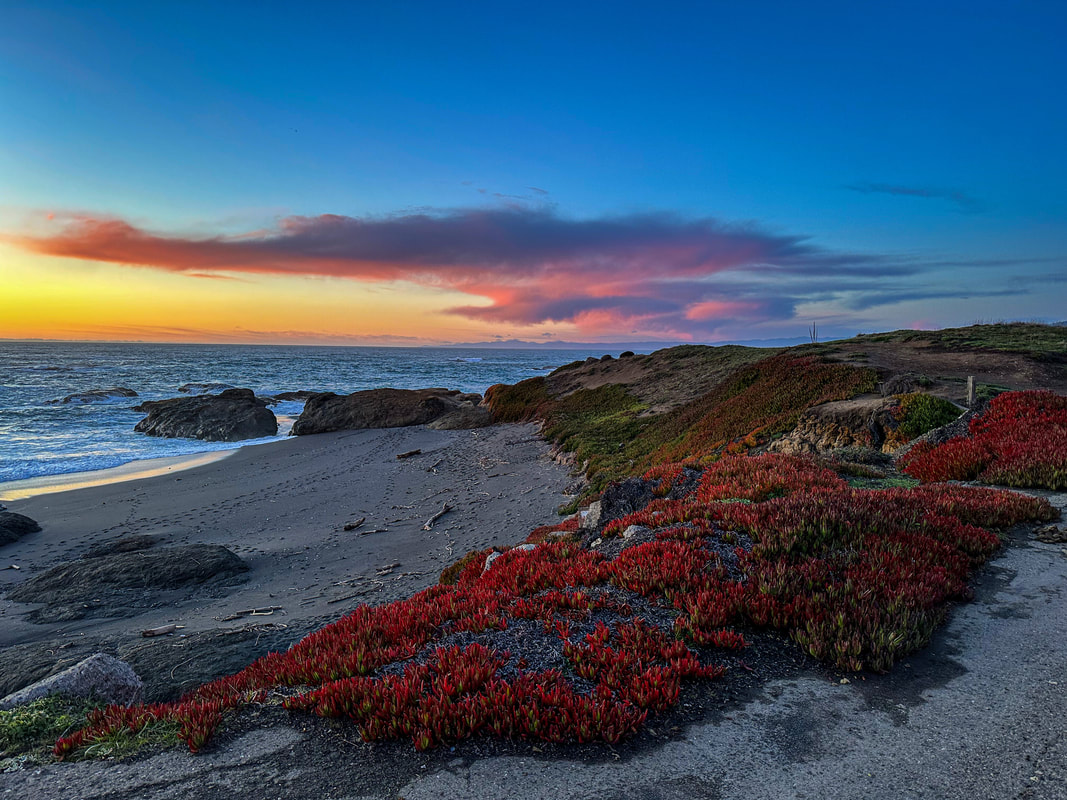 |
AuthorsSteven and Melanie Archives
April 2024
Categories |

































 RSS Feed